Ridin’ the Rails

Daniel was traveling tonight on a plane, which was nothing extraordinary since Daniel traveled a lot, going to and fro in the air so frequently that one could safely say that Daniel had no permanent address. Yes, indeed, no permanent address at all. In fact, this once tried and true description of one’s station in life, where one actually resided, on a permanent basis, was becoming obsolete among a certain subset of the population.

Daniel, who insisted on using it/that pronouns, was in fact one of them, the Neo Zen folks, ages roughly 15-25, who had started living on airplanes. There were hundreds or thousands of them in the skies at any moment, crisscrossing the nation or even the globe. Sometimes, they would intentionally converge at some airport’s private lounges to have freakout events, as they called them, leaving the place utterly destroyed, tabs unpaid, all the liquor bottles drained and everyone back on board on different flights heading to parts unknown.

You could tell these Neo Zen travelers by the tiny airplane wings tattooed behind their left ears. Not that you needed that marker to identify them per se, as they were pretty noticeable once you knew what to look for: young and brash with spiky dyed hair, large 1970’s plastic glasses frames, faces buried in their phone screens without a care in the world and completely unconcerned about displaying any social graces. They belched and farted, reached across people sitting next to them, chewed with their mouths open and laughed loudly and obnoxiously when they saw a funny video on their TikTok feeds.

Daniel was one of the early adapters and someone that many of the other Neo Zen flyers looked up to. “Daniel’s here!”, someone would say excitedly as the sliding doors to the lounge opened and it walked in, phone up to it’s face, swigging from a bottle of Jack Daniels before finally looking up and surveying the room.

This group of airborne ruffians, the plane gang, as Time magazine had called them, had developed a spurious method of using crypto funds to buy airline tickets. They didn’t have to be your own crypto funds at all, they could be anyone’s. Any member of the group, once they learned the method, could buy an endless supply of airfares and pretty much live constantly in the skies and in the airports without any permanent address whatsoever.

Whenever any of the Neo Zens actually did occasionally pass through the sliding exit doors of an airport and get into a car to go visit family for a few days or whatever, they were said to have “landed”. When the rest of the group learned that one of them had “landed”, they would roll their eyes and grimace in empathy with the poor kid who had to stop traveling for a few seemingly interminable days and be subjected to the melliferous odor and stale and suffocating mannerisms of their family home. The friends and acquaintances would, with genuine worry, wish that their landed companion would be OK and would soon return safely to their traveling ways. Having one of the group away in landed mode was painful for all.

In fact, once one of the Neo Zens had returned from being landed, there would surely be a big party on their first flight back, and there was nothing anybody could do about it; not captain or crew or passengers or even the FAA or the TSA. Homeland Security? Give me a break. Nobody could touch these aerial ruffians. They were about as worried of being put on the no-fly list as you would be frightened if an ant crossed your toe.

The threat of prosecution or any kind of impedance to their activities was totally insignificant. They had the means to create new identities, new passports, wipe clean their status as if that destruction of the Sky Lounge in Dallas never happened. Daniel themselves had done it numerous times. They had amazing disguises to jam up facial recognition cameras. If they wanted to get on a certain flight, there was nobody that could stop them.

 Daniel themselves had just come back from being landed for an entire week, pulling up to the St. Louis airport in a big-ass Lincoln Navigator. He got out without acknowledging the driver at all, and entered through the sliding glass doors into the ticketing area, breathing a sigh of relief. Daniel had contracted some kind of intestinal virus and decided to go home and get medical treatment. It was that bad. If it hadn’t been potentially life-threatening, they would have powered through it with endless drink and drugs until it eventually went away, or they just didn’t feel it anymore.

The week at the family home in a little shabby chic shotgun shack on the banks of the Mississippi had not gone well. Daniel had no intention of reconciliation with Ma nor bro and sis (Bro had been Sis, and Sis had been Bro, but in the intervening years since Daniel went aloft permanently, their genders had been exchanged). The family, on the other hand, clinging to traditional notions of love and connection amongst kinfolks, especially the nuclear family, were somewhat frustrated and exasperated in their efforts to get Daniel to acknowledge any kind of bond whatsoever. In Daniel’s heart, there was nothing at all that resembled that sentiment.

So, it was with lot of sadness, and relief, a lot of deep breathing, that Daniel’s time at home came to an end at they called for a car on their phone. Ma had been exasperated by Daniel’s complete and total attention to their little screen and inattention to anything else, that she was a mess, with feelings of loss, anger, frustration, and ultimately letting go. By the end of the week, intestinal issue resolved, she was ready for them to get the fuck out of the house and stay out, if that’s how it was going to be.

Daniel had booked a flight to Panama City and all their closest friends had rerouted in order to get to St. Louis in time to be on the same flight. It was an early evening departure, Daniel’s favorite time of debauchery. They occupied three entire rows in the middle of the airplane and as they taxied toward takeoff, Daniel dropped a little red pill in each of their fellow Neo Zen’s gin and tonic. “This is going to be so lit!” they shouted and all the Neo Zens screamed in delight as the wheels lifted off of the tarmac.


Bus Stop

Standing there in the early morning chill, the same group as every day, looking out toward the eastern sky as the sun slowly crept a little bit higher over the horizon, they waited for the bus to arrive, the #99 route. Some looked into their devices in defeated attempts at stimulation. Others kicked at the ice and watched the steam from everyone’s breath push into a common cloud before dissipating quickly. No one spoke, as was customary. They’d shared that common morning bus stop experience with each other for only a few months as it were; certainly not long enough to break the ice metaphorically with risky words of introduction. They could just kick at the real ice on the sidewalk, silently, each one on their own, the need for connection not galvanizing enough to chip away at the barriers between them. 

The bus came exactly on time, as it always did. The soft voice of the recording coming through the speakers implanted around the bus shelter gently imparted the message: “Number 99 approaching. Number 99 approaching.” The doors slid open silently and the commuters shuffled aboard in single file, a solitary beep registering each individual’s presence through a code scan. There were no bus drivers anymore, of course. Only a few of the elderly souls on the bus even remembered a time when there were actual people driving the bus, everyone else having only heard strange tales of a time when humans operated vehicles.

Not that everyone looked back on such times with warm nostalgic remembrance. Mr. McMahon, for one, seated at the front of the new model cyberbus was thankful everyday for many things, including the smooth ride along the route.  Just thinking back to the old times physically pained him, as well as psychically. He had suffered organ damage due to the quick acceleration and sudden hard braking habitually done by the bus drivers of the past. They would usually ratchet it up to 40 or 45 miles per hour leaving one bus stop before quickly braking to a stop upon reaching the next one, causing poor Mr. McMahon and others to feel like internally, things were shifting, and not in a good way.

He did miss talking to the bus drivers, however. In days gone by, he had liked to sit in the front and talk with the driver. Now, that was impossible. He and Richard, his old driver on this route, would talk about the baseball scores or other sports news. They would sometimes discuss their family situation, things like that. It was nice to have that interaction. He was also considerate of the other passengers on the bus who were not chatting with the driver. Mr. McMahon felt that they enjoyed listening in on the conversation, that it was comforting to them somehow; just the sound of human voices discussing nothing of any real significant importance.

On the #99 Cyberbus, there was no talking. The sound coming out of the speakers was very low. Cartoon music and puerile dialogue in high-pitched voices was the mandatory soundtrack for the passengers on the bus, while the LED strips overhead switched between various primary colors. The experience of riding the cyberbus felt like a cross between being at a nightclub and a daycare.

Mr. McMahon was on his way to work at the discount supermarket. For even though he was well into his eighth decade of life, he still enjoyed working and there were no other alternatives for him anyway. The rest of his family was already deceased, and he had no known relatives to go live with. The senior care facilities had all been closed down by the health care companies. Social security funds had been absorbed into defense spending. So, what was left to do but keep working. Riding the cyberbus to work was relaxing for Mr McMahon. While everyone else mostly stared down into their device screens, he gazed off into the distance, reminiscing or ruminating about some ideas and theories that he’d carried around inside his head for many decades, still trying to work out the particulars.

Mr. McMahon greeted everyone as he walked into the break room to put his uniform on and clock in. He always had a kind word for everyone else. Perhaps, him being so elderly and genuine, no one viewed him as a threat or a weirdo, or as anything other than what he was: a gentle, elderly man; a bit melancholy at times, perhaps, but, for the most part, always up and at ‘em and ready to chat with anyone.

He proceeded out onto the shop floor to work his shift. He would clock out in the early afternoon and then, before boarding the Cyberbus #99 to return to his apartment, he usually liked to get a small cup of coffee and sit and gaze out the window for a while, remembering people from his past, family and friends. Random poems formed in his head, composed of a lines he heard in the store today mixed with something his father had said to him seventy years before. It was funny how it all worked out, how the lines seemed to go together so well; like his brain had been waiting for just the right words to complete the phrase that sat in his head for seventy years. He smiled and put on his coat as he saw the bus approaching.

Lawn Care

Because of all the rain, horseweed was a real menace in that summer of ‘77. It grew as high as the second story windows of most homes in our comfortable and usually well-trimmed suburban housing development. For all of the adults and children in the neighborhood, nearly all white and middle class, each summer had usually taken on a similar, familiar tenor; the rhythm of the days and nights, the typical sounds of the birds and insects, the daily yapping of the common little doggies begging to be let back into the house and the excited and happy cries of all the children as they played on the lawns till sundown, their joy replaced by aggravation and turmoil as they tried to swat away the swarms of mosquitoes on their way back to their comfy homes for the evening, mom and dad leafing through magazines or doing the crossword in the dim lighting of the family room, windows open and ceiling fans slowly whirring silently. Bob usually spent his days in a chaise lounge out by his pool, laying there in shorts and a t-shirt, Bob Seger playing on his portable cassette deck.

His wife Carol had gone up to New England for a couple months to take care of her ailing mother. The kids were all grown and out of the house. So, Bob took advantage of his alone time, so to speak, to just sit by the pool, only getting up from his chair to grill a hamburger at lunch time. He stopped shaving in the morning and then stopped brushing his teeth as well. He slept in the same shorts and t-shirt that he wore all day sitting by the pool. He was alone and he liked it that way. By mid-June, because of all the rain and Bob’s disinterest in any mowing or lawn care, the neighbors couldn’t even see him sitting by his pool, the grass and weeds having grown so high that they lost their view, only the sound of the song Night Moves emanating out from a tinny speaker through all the foliage and beyond the yard.

The horseweed stocks were so tall and thick that small children would have been able to climb them. Chickenweed stretched out and smothered the chain link fence. Duckweed vines grew up and around the horseweed stalks while catweed heads spread their seed pods shooting off in all directions. Foxweed grew out of every crack in the walkway and paved patio around the pool and the wormweed climbed up high up every light post and telephone pole, wrapping them in a shimmery semi-verdant glow. Insects and moths of all types crawled, flew and flitted throughout the weed jungle of the yard as Bob sat there contentedly. He didn’t read. He wasn’t smoking or drinking. For the most part, he just sat there. He must be sad, everyone thought, or have an active imagination, some people said, giving him the benefit of the doubt.

Carol came back from New England one Friday morning and unloaded her luggage from the station wagon. She thought that her husband would come out and help her but he didn’t seem to be about. The house was a mess. Half eaten cans of baked beans filled the kitchen. As she looked out the window above the sink, she was shocked that her backyard had been replaced by a foreign landscape. She thought she glimpsed her husband lying by the pool, amongst the tallest weeds she had ever seen.

Carol didn’t know whether to be angry or concerned, or afraid. The travel was disorienting enough, but then to arrive home and find a mess of this proportion was extremely disconcerting. She started to have a go at cleaning up the kitchen but, after about thirty seconds, she gave up and threw some sticky cans back in the sink. She went to the bathroom to wash her hands, and saw more grime and noticed a disgusting smell emanating from the hand towel. She could see that the shower had not been used in some time. Gingerly, she stepped out of the bathroom, down the hall and toward the back door.

She grabbed the door handle and pulled it open. She slowly stepped out onto the walkway as the insects swarmed back and forth among the horseweed and the dogweed and the catweed.

“Bob!” she called out, not wanting to walk any further out into the backyard jungle. Who knows what kind of poisonous creatures lied in wait for her, she thought. As she contemplated whether to advance further or retreat into the house, her husband came walking down the path toward her. “Hi honey. I’m glad you made it back ok.” He gave her a kiss on the cheek and she reeled back from the smell of his breath.

“How was your trip?” he asked and looked at her smiling. When he took in her horrified expression, it reminded him of how he must look. “Oh, the beard. Yeah. I’m going to shave. Don’t worry.” Carol, put a hand up to her mouth and surveyed the yard with the same look of incomprehension. Bob turned and looked over his shoulder. “Oh yeah, the yard too. Kind of messy. Right?” He strode past her to the refrigerator and grabbed a can of RC Cola. He opened it and took a chug, suppressed a belch, and motioned toward the bedroom with his chin.

“Tell you what. Why don’t you go unpack and relax a bit and I’ll get everything straightened up.” Without waiting for an answer, he took another gulp, this time not bothering to suppress the belch. He wiped his mouth and headed out to the garage where he, without hesitation, started the lawnmower and steered it toward the front yard. Carol wheeled her suitcase upstairs into the bedroom and closed the door. She unzipped the luggage and opened it, but then sat on the bed and then laid down to stare at the ceiling and try to process what she was witnessing, and why. What was happening to her husband, she asked herself? She soon fell asleep, a deep slumber not occasioned by exhaustion as much as by the brain’s unwillingness to comprehend something so strange and potentially threatening.

She awoke to the voice of her husband beckoning her to open her eyes. It was late afternoon, she could tell by the sky looking out her window. She swallowed, trying to get the bad state out of her mouth, and turned her head to see her husband standing there, looking very clean and handsome. “Wow, honey. You were asleep for quite a while. You must be hungry, I figure. So why don’t we go out to eat at McGlynn’s. It’s Friday after all. I’ll give you a bit to get ready.” He bent down and gave her a kiss on the cheek and went back out of the bedroom.

Carol raised herself up and looked around. She gazed out the window overlooking the back yard and saw that it was looking neat and clean. There were no weeds, the grass was cut and the pool was shimmering in the late afternoon sun. She shook her head, disbelievingly, and scampered downstairs to the kitchen, where everything had been cleaned and put away. There was no trace of any mess whatsoever. She looked at Bob, who sat at the kitchen table reading the newspaper. He looked up at her and smiled. “Ready to go?”, he asked.

Caution

A cautionary tale is a story that you should learn from, a message embedded in a story, but I don’t know if there are indeed tales that prevented anyone from doing something harmful, stupid, foolish or grossly unthought out as it were. I mean, you’re going to do what you’re going to do, right? Even taking into consideration the proven results attested to in the collective lived experience of others in similar positions previously.

I mean, a really strong cautionary tale might sway you a little bit, maybe, for a second or two, before you slip off of the ledge and break your neck like countless fools before you. You see, that’s what I thought while I was working as a cub reporter in Pittsburgh back in the early 1960’s. I covered the waterfront, so to speak. That was my beat, the north end along the river, the mostly Italian and Polish neighborhoods around the old Heinz ketchup factory. I was digging up dirt on a guy who was making a killing selling phony life insurance to all the new immigrants coming in; families from the old country.

 The guy’s name was Del Pizzo. He worked the Italian families. He had a partner, a Roma woman named Carmelina Wilenski, who worked the Polish neighborhood. They were in cahoots together, selling phony life insurance policies, as I said. They figured that the newly arrived immigrants were worried about their children if something were to happen to them at their dangerous workplaces. Because the only work available to them, you know, was in factories and mines, in sewers, places like that. So, if something should happen, and they were to perish, how would the kids eat? The wife widowed, forced out into the street.

So, Del Pizzo and Carmelina, they came up with a name, Restful Comfort Life Insurance Company, and collected the monthly premiums from each policy holder, whose numbers were growing larger every week. They’d meet at Del Pizzo’s family restaurant on Sunday afternoons while everyone else was at church, and they’d divvy up the money while eating baskets of fried zucchini and drinking Lambrusco. They never intended to pay on anybody’s policy.

I got wind of this scheme through a guy I know who was a cook at the restaurant, breading and frying up the zucchini, who overheard them talking one day and let me know about it because we were old friends, and he knows I’m a reporter. But then he says to me, “I know that it would be great for your career to write up this story, but I’m going to ask you not to do it. Don’t mess with Johnny Del Pizzo. You’ll end up in the bottom of a pickle barrel floating down the Allegheny River just like everyone else that’s ever crossed him. Don’t do it!” he warned me. “I regret even telling you about it, but do me a favor and just let it go. Let’s forget about it and we’ll go to the ballgame next week.”

But, you know, I didn’t do that. I couldn’t. It was too big of a story. I thought about the big boost to my career that would occur by me following through on this and publishing a scoop of this magnitude. So, I started hanging out at the restaurant myself, trying to dig up dirt on Johnny and the Polish dame while getting fat on lots of fried zucchini. Well, sure enough, Johnny gets tipped off that I’m lurking around asking questions.

One day, as I’m walking over the bridge by the ketchup factory, I swear that I could tell some guys were tailing me. They were small, though; not big guys by any means, so it didn’t register at first that they might be Johnny’s thugs, or hitmen, anything like that. In fact, they looked like a couple of accountants, thin and frail, pale-skinned with wire-framed glasses, and a woman was with them too.

As I looked over my shoulder, I saw that she sported a hideous looking hat and wore pants instead of a dress, which I thought was strange. Regardless, I continued on my way over the bridge, but I never made it to the other side. Soon enough, I had a handkerchief soaked in chloroform over my face. I passed out, and apparently was immediately shoved into a pickle barrel. The top was nailed shut right there on the bridge and the barrel was tossed off the side and now I’m floating down the Allegheny River in a pickle barrel just like my pal warned me would happen.

Maybe someone will find me and open up this barrel before it’s too late.

Once More to the Breach

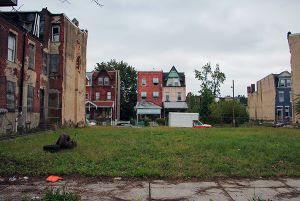
Across a garbage-strewn field stood a building, a structure so ambiguous in its design that it was almost certainly indescribable. The common categorizations didn’t help to pin down its design and purpose either. Residential? Commercial? Vintage? New? Perhaps Mid-century bland and non-descript would be apt.

Bob stood looking at this grandiose question mark of an edifice. He stood on the sidewalk at the intersection, gazing across the weedy, trashy expanse that used to be an oversized bank headquarters before being demolished several years before in the latest round of urban metamorphosis.

He zipped his coat up higher over his neck area as a cold wind gust shot out of the north, and started marching hesitantly toward the building, wondering if he had the right address. He squinted and scanned the topography ahead of him, searching for the typical sign that he had expected to encounter- for rent, leasing, now available, going fast. But, he didn’t see anything. That didn’t sway him enough to abandon his mission, so he kept shuffling his feet forward in his soft, amorphous, billowy shoes, moving ahead.

He searched his pocket for the slip of paper on which he had written the info for the apartment, but it wasn’t there, most likely having been left on his end table before leaving the house- their house, the one he and Carol had shared together during 27 years of marriage. Now the rooms were cluttered with boxes of stuff as Bob made preparations for moving out, if only temporarily as had been decided.

Not having found the paper in his pocket, he paused and glanced around again, his eyes squinting and his mouth agape, looking like some 21st Century version of Henry Fonda or Jimmy Stewart, bewildered in a stark tableau of black and white, the wind blowing as everything familiar dissipated into the atmospheric fog.

Well, at least it’s not one of those new constructions, Bob thought, with a ridiculous name like Prairie Flats or the Isaac or Origami. He wasn’t sure what kind of place he wanted to move into, as no conceivable option seemed to click in his ongoing mental processing of the situation.

He and Carol had come to an impasse in their marriage- 27 years of intimacy mixed with the unavoidable brusque bitterness of trying to inhabit a shared space, compounded by the usual tests of time, and the unusual ones as well: depression, self-doubt, COVID, George Floyd, social media, 09/11, Amazon; all of the subtle yet diabolical forces swirling in the air outside the window and seeping in through the cracks.

It was only temporary, they had decided, and Bob was unsure whether to hold out hope for a reconciliation with Carol, or to turn and face the future and move on. He couldn’t decide what to do, what he even wanted to do. He had already, prematurely perhaps, signed up for an online dating app, but had deleted it before undeleting it, and then deleting it again. Meanwhile, the building stood before him- a mish mash of stucco, transit siding, stone, brick, even some kind of red plastic polyurethane material that framed the windows. It was quite ugly, but Bob had an appreciation for these kinds of buildings; a soft spot for people, places and things that didn’t know what they were, or wanted to be. He at last saw a small sign in one of the windows- For Rent- and he rung the doorbell and stood there with his hands in his pockets, waiting.

Pre-dawn Special

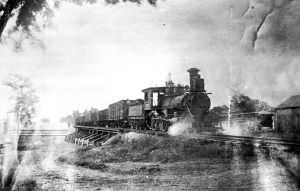
The clanking noise was driving me mad. It seemed that every morning, as I customarily awoke before dawn and then fell back asleep, only to repeat the cycle several times before finally fully re-engaging with the material world, I would lie there and hear the sound of a train going by, the low growl of the wheels on the track and the metallic, rhythmic clank of whatever it was on the train that made that sound. I could quite clearly hear that old iron horse passing by under the pinkish cloudy sky of early morning.

Strangely enough, my little cottage was not located near any railroad tracks. The closest line was at least a mile away and no longer in use, or so I was told. Coincidentally, according to some research that I conducted at the public library, there might have been some old trolley tracks lain beneath the asphalt of the roadway that went by the cottage, but that obviously had not been heard or seen from since they paved over them a hundred years ago and shipped the trolley cars down to Mexico, where they’re still in use, or so I’m told.

So, from where was this sound emanating? Or, from whence? It was not loud nor abrasive as such, just a low volume yet clear and distinct collection of sound waves, indicating a train, a freight train perhaps. It might have been mistaken for the sound from a pre-programmed alert that might come from a computer or some other device; easy enough to do these days- wake up to the sound of a train going by- if that’s appealing to you as a way to start your day.

But impossible in my case, as I had no computers or electronic devices, and all of my clocks were mechanical in nature or were simple, primitive electronic contraptions that were only capable of buzzing or making basic bell sounds. I had not one train sound available, or any other type of audio file for that matter.

My grandma got spooked when I told her about the train sound. She was really shaken and said that it was the sound of death and dying, someone coming to fetch some poor soul whose time had come, and carrying them home, seemingly on a bed of coal or in an otherwise empty boxcar, so I imagined.

My grandma thought it could be coming for me. She said a lot of prayers and put out some things: offerings, substances that I had no prior knowledge or awareness of; as a way to protect me, she said. And once the train sound kept happening every morning and I didn’t go anywhere- I was still alive, meaning- she concluded that her interventions had saved me and the train was going to go find some other poor soul to carry to the underworld, because down below is really the only place a train can go; not up, up and away. If someone was glory bound to the good place, I think they would send a hot air balloon or something like that.

Meanwhile, that train keeps chugging along every morning at about half past five, and I’m still alive.