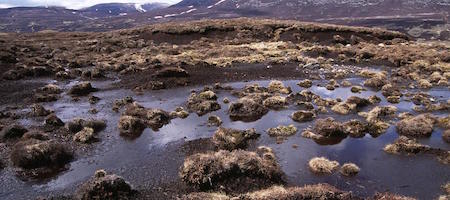
The young ladies moving to the city from the countryside were said, derisively, to be “straight out of the bog”. If that were true, then they could have been a thousand years old or so, given the bog’s ability, despite its moisture, to preserve ancient items intact without any rot or decay. Men working there with shovels and picks, tearing out the peat to dry and be burned for fuel, would often report uncovering shoes, urns, clothing, tools, even bodies that had been deposited there eons ago and looked like they just got dropped off yesterday. Out of the bog meant you come from the past, the wild, the slow, eternal patterns that were anathema to city life.
That’s how they put it in the city newspapers and magazines. I’m sure the country folk had equally derogatory terms for the asphalt and concrete crowd who might venture out into the countryside for a bit of fresh air. One more division among many, dividing us from each other in new ways we invent daily for just such purpose. Crows don’t care. They are happy to survive on corn and crops and warm, furry rodents in the countryside during the warmer months, and then move into the city during the winter to feast on garbage and city detritus. Hopefully, no one makes fun of them for it.
The young bog ladies moving into town were somehow all named Elizabeth. There was one Carol and a couple Nancys mixed in, but the rest were all called the same name. At least that’s how I saw it. But maybe it’s because that was my mother’s name, and in her absence, I craved more Elizabeths. I willed them forth, and they arrived. Some men married them and if things didn’t work out , they buggered off and married another one. It was almost like a royal succession, the men and their successive wives, Elizabeth I, Elizabeth II, Elizabeth III.
In my case, the Governor granted me a tract of land on the outskirts of town, where the elevation starts to climb up the hillside. Why did I receive this tract from the Governor? Because I applied for it and seeing nothing came up as to prove I was not a good gentleman, and because my mother and wife were named Elizabeth, I was granted such and set to building a little house on that spot. I did not question why this was the way things worked, as others might who do not petition the governor for their land, and just merely set up where they wish. I suppose that I played by the rules, so to speak, and got a paper that said it was mine from now on, no matter who was there prior.
There we were, my Elizabeth and I, no matter which Elizabeth it might be. We dug up the spot and brought in the timbers. We cleared out the snakes and planted us rows of legumes and grains. Being on the outskirts of town as it were, gave us the best of both worlds. We were rural but had access to the bright lights and the dance halls, the haberdasher and the chemist. Until, gradually, those all disappeared and there was really no reason to be so ensconced in the gritty muck of the dirty diaper pile, especially when folks started spending their money on explosive devices and launching them across the way towards their neighbor’s homes.
So that’s when it came time to take a reckoning of things and consider pulling up the stakes and reconsider our position. It came to Elizabeth one evening, the thought of the bog, a return to the bog. It wasn’t just the thought of it, though. It was the sound of it, the smell of it, the feel of it. The whole boggy experience, a feeling of enrapture once one had been away from it for so long. It was beckoning to us, it seemed. But that is entirely untrue. The bog beckons not. It just is. It persists. It is we who imagine feeling the beckon. So we go, or we will rue the day we decided not to go, or didn’t decide as such but just never got around to it.
For us, going bogside was just another chapter in the storybook. We dug out the peat. We walked among the asters and the dragonflies. We sat on a log and talked of other places, other times. But the bog was welcoming and proved to be a good place for the children to play. They scattered beneath the branches and into the thicket, and sometimes one of them didn’t come back. But that’s OK because they will turn up sometime in the future, as the bog preserves everything. It provides a lifestyle, a connection, a comfort that suits us just fine.





 THE MOSSY BOG