The Holy City

Rozencrantz and Gildenstern lay wide awake, their seats too uncomfortable for sleep, as they rolled along on a train toward the Holy City. Or, was it a horse-drawn carriage? Either way, it was, and remains, a way to get from one place to another, usually in the most direct way possible. The two of them differed in their outlook in this respect. Rozencrantz was open to meandering, taking one’s time and not going straightaway in the quickest manner. In fact, not only was Rosencrantz open to meandering, but preferred it and disliked going direct. Dear Gildenstern was the direct type, and even suffered panic and worry when taken off of the straight and narrow. “Why are we going this way?” the panicky thoughts jumped around in Gildy’s brain, building one upon another in an anxiety scaffold. Rosie, knowing this, usually booked the direct package, the quickest route, though privately detesting this obligation, sometimes even making these recriminations openly, which usually ended badly as the protestations would come out sounding like silly selfish whining.

Either way, here they were on their way to the Holy City at last, where the magic happened, where the low hum of supernatural awareness is always in the air. The Holy City is in fact a place where, if you’re in the right frame of mind, the birds seem to look right at you and call your name, especially the grackles and the magpies. It was even perhaps mythologized that the magpies had brought the magic in the first place, and that once enough people bought into that concept, then the full slate of revelations unfolded like a perfect summer morning on the seaside.

There they were, Rosie and Gildy, about to get a taste of it themselves, and see what was true and what had perhaps been invented. Or, even if whether there was a difference between these two categories at all. At last, they approached their arrival and the conductor came around asking for boarding passes and passenger designation. It seemed like a prying question but the conductor was so amiable about it, to put everyone at ease. This conductor is so holy, thought Gildy, I could see this conductor gently talking a dog off of a meat wagon. A hungry dog, at that. Ten hungry dogs. They’d be curled up around the conductor’s ankles in no time., like little lambs. What a strange thought, mused Gildy, as the conductor punched his ticket with the wink of an eye.

The kind conductor called out in a sing-song voice. “If you are traveling to the Holy City, you will know the reason why. It will say so right there on your boarding pass. Printed out above your seat assignment, next to your Known Traveler Number.”

He raised the pitch of his voice and slowed his cadence. “It will say so, right there, your status, and your fellow passenger designation: Future wife, Just a friend, Romantic and Intimate. For now.”

“Passenger designation? What’s that mean?” Rosie asked the kind conductor. 

“Well”- he replied- “designation means your status. Are you a believer? Are you connected? Are you committed, and, if so, to whom or what? Or, are you open, unattached; skeptical, even? Perhaps unwilling to choose a path and believe in it, or to select a partner and to attach yourself firmly to that person, which is not as bad as it sounds, I might add.”

For those that believe the strongest, who unabashedly attach themselves to a believer or a person or an idea, it is them that sometimes fall off the quickest, their ardor having died out unlasting. Sometimes, it takes a mix of certainty, and openness to have an epiphany. Here we are. The Holy City, at last. Skeptics are welcome.
Tommy Toomey

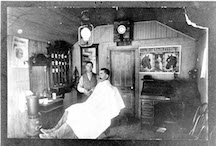
A harmonica cannot go out of tune, since it is a pre-tuned instrument, already set to certain scales. That said, some people can really make it sound amazing but most others haven’t reached that level of ability. Tommy Toomey was one of those lesser talented fellows. You could have sworn the thing sounded out of tune or that maybe a cat was blowing into it rather than a human. It was not anything anyone would want to hear, but people tolerated it. He played most Saturdays out in front of Crookshanks’s barber shop in downtown Meadow Bridge, sitting on the stoop with a can of Coke next to him and a bag of Maverick tobacco that he would reach into from time to time and roll himself a cigarette, giving the folks getting their hairs cut from Don Crookshanks a respite from the noise.

While he was smoking and sipping on his Coke and chatting up the passers-by, people seemed to appreciate the absence of the atonal sloppy playing, even if it meant just listening to the wind blow through town. That seemed to most a more pleasant sound. After a while, he would start up again and people had to readjust themselves to the aural shift and let their brains do the work of pushing that sound to the background, behind the sound of Crookshanks’s clippers cutting little boys’ hair into typical hillbilly bowl cuts. He was trying to learn new styles though, and sometimes it worked and sometimes it didn’t come out too good, and some boys left the shop wearing the visual equivalent of Tommy Toomey’s harmonica playing.

Directly next to the barber shop which wasn’t but six feet wide, was the post office, which itself was about the same size, just a one room shack that stood at the center of town, which meant the only crossroads. Toomey’s great great grandpa Elijah Toomey had been the first postmaster at Meadow Bridge and this had accorded their family some kind of prestige in the history of the town, even though the total population was never more than 500 people or so. Some families counted, in their ancestry, the first mayor, the first sheriff, the first justice of the peace, the first mill owner, and other folks had nothing like that in their pedigree, so if your great great grandpa was the first postmaster, then that was something to be proud of.

Right in front of the barber shop was the stain on the sidewalk where the only African American resident that Meadow Bridge ever had, Black Bill they called him, was gunned down twenty or so years ago. One of Crookshanks customers was the one that done it, but of course no one was ever prosecuted. That was the same year that Jud Hickman got stabbed at the 4th of July Fireworks. He had told Cornelius Bragg to go on home and sober up since he was too drunk to be out at the festivities, with people and their families there enjoying the holiday. Well, Bragg came back while Jud was sitting under a tree resting, and drew a knife blade across his throat. Jud’s wife and three children just down at the end of the block came running and tried to stop the bleeding but it was too late. Cornelius Bragg tried to flee to Ohio but was brought back and was tried and convicted for murder.

That was a rough year for Meadow Bridge but there was no other gruesome events happening for some time after that. The populace was mostly hard-working people trying to pay the bills and raise their families. Some got a little richer and some got a little poorer, but mostly everyone was pretty much all in the same boat. Tommy Toomey himself worked for a while as the postmaster but then got bored and took a series of odd jobs around town to pay the bills, leaving him time to come down and sit in front of the barber shop on Saturdays and play his harmonica.

He didn’t have no family really, just a precious dog named Mongrel who had recently come up missing. She was out one night as usual and never came back to wait outside the door to come inside Tommy’s house down at the end of the lane. That was about a month ago and some people thought they detected a little more sadness in Tommy’s harmonica playing these days, but that was up for personal interpretation. Like others, pretty much everyone in the area really, Tommy Toomey was Scots-Irish and those folks didn’t really let their emotions show. Heck, they would have trouble finding their own emotions even if they wanted to show em. But some folks heard sadness in Tommy’s harp playing, if you can call it playing, and that was ever since Mongrel had not come home that one night about a month ago.

Etta Gadd came out of the post office after sending off some letters to family and friends. She stopped in front of the barber shop as Tommy was sipping his coke and rolling a smoke. “Hey Tommy. Get your dog back yet?”

“No. No. Mrs. Gadd. I don’t expect she’ll ever come back now. Been near a month.”

Even though Meadow Bridge was a stable little town, as compared to most, there was still a bit of movement going on amongst the residents, human and otherwise, pretty much all the time.

A wife would leave her abusive husband, take the kids and go to a relative’s house to stay for a while or forever. Teenagers would run off from time to time, sometimes for good reasons and other times for reasons that usually didn’t turn out so well. Birds would migrate. Traveling workers would pass through during harvest time. Once, a few years before, a whole bunch of strange folks came and bought a house up on the mountain. Supposedly, they were a cult moved here from California. That’s what people said. And sometimes dogs would run away.

“Well, if it’s in her heart to, then she’ll come back. Don’t you worry.” Mrs. Gadd said, smiling at Tommy Toomey, happy to give him some encouragement. She took a dime out of her purse, looking for a hat to throw it into.

“No. No. Mrs. Gadd.” Tommy waved her off. “I don’t play for no donations. I just like to come out here and sit for a while.”

“Well, if you’re going to entertain us, you might want to learn you some hymns to play.” She replied. “If it’s in your heart to do so, that is. It might sound real nice.”

Tommy Toomey lit his cigarette as Mrs. Gadd looked on, squishing up her face in disdain as the smoke was exhaled. “I don’t think I am able to do that.” he said. ” I just enjoy blowing a little, that’s all. Listening to the sounds it makes, seeing how different notes make me feel.”

He put his cigarette down and started blowing again, making an awful sound. Crookshank winced a bit as the sound seeped into the tiny barber shop. He did not close the door, though. He would never do that. And after a little while, what he heard Tommy playing was actually starting to sound quite a bit nicer than ever before. Well well, he’s coming along then, Crookshanks thought, as he smiled and snipped away with his shears. 

Undone

I want riddles to be over

I want mountains to disappear

Empty the oceans until the rain

Comes back again. I will observe

Closely as the drops fall and form into

Pools and streams, growing deeper, yet

Not quite obscure. I will observe so

I remember its uncloaked contours when dry,

how it formed, each stage of permutation.

I will know how it came to be, no longer

just a flat gray expanse that hides itself.

Indigo

Dark blue was her favorite color and she tended to use that in some of her online user names as well, i.e. darkblue27, darkbluemountains, thedarkestblue99. Even as she sometimes lay awake at night, new ideas for names using those two words would pop into her head uninvited. It was hard to stop this from happening, so much so that she thought about changing her usernames to other words, trying a new theme entirely. But then, I will probably just get stuck on the new name as well and have that always in my thoughts, she surmised.

Before the internet came along and changed everything, the land where Carolina now lived was a vast plain of fertile soil for farming. Before that it had been forest, but all the wood had been timbered out by the engines of industry who built the houses, buildings, railroads, cities and towns that fanned out across the former forests and prairies. That change must have been just as drastic as the one that happened when the internet came along. History illustrates how one way of life is replaced by another, and that, in turn, comes to an end eventually as well.

Throughout that process, there are plenty of people who remain nostalgic for the past, for how they used to live, but once these people have died off, then the past is forgotten until a new past comes to take its place.

The new way of life had brought buildings and roads to the once fertile valley, the land being once again repurposed for what the people with power and money thought it should be used for, which was to accumulate more power and money. Carolina was just a silent witness, with no influence. All she could do was to go apply for a job at one of the big new buildings, because the jobs from the old way didn’t exist anymore. So, that’s what she did and the work was very dull, it made her mind wander. For some reason, one day she started thinking of all her favorite things so that if someone asked her, she would be able to respond with some kind of certainty. Favorite high school teacher: Ms. Hayden; Favorite song: Sweet Jane; Favorite food: fettucine carbonara; Favorite dessert: Lemon merengue pie; Favorite color: dark blue.

Since moving into a new apartment in order to be closer to the workplace, Carolina also started to think about her identity more, and how that should be represented by the décor that she chose for her bedroom. She lived with her sister Ava, so they both had to negotiate their own tastes and ideas for the common areas of the house, but for their individual bedrooms, it was up to each one, of course, and Carolina chose a variety of adornments that were more conceptual and non-representational in nature. She liked the ambiguity of that. Her sister was more focused and direct, so she chose pictures and paintings of common objects found in household art and decorations: plants, flowers and birds.

At the building, Ava and Carolina both worked in the same department until one day Carolina was selected by the management team to train for a new job. They even hinted that the new job might require a re-location, as they were building a new facility in a bordering state. It would be more money and more responsibility, they said, and asked Carolina to give them an answer by the end of the day.  Carolina thought “Who are these people that want an answer by the end of the day? Don’t they know this is an important decision that requires time to consider, conversations with family members, pros and cons to weigh and deliberate over?”

Actually, the management team had said, through their email, that they wanted an answer right away. It was only through a request for more time that Carolina had received permission to respond by the end of the day.

I might take it after all, she thought. Her sister Ava had been seeing this guy she had met at the building, and he had eventually asked her to marry him and move back to his hometown with him. They had been discussing this for weeks and Ava had been hinting that she would probably say yes. She was in love with this guy Júan and wanted to leave her job at the building and go to a new place and do new things. With that in mind, Carolina was pretty sure that she should say yes to the new job as well, for if Ava was leaving, she did not want to stay in this place by herself and keep working at the building. She emailed her response back to the management team that yes, she would accept the relocation offer. However, besides the fact that the new building was located in the neighboring state, she knew nothing else about the job particulars or even what town she would be moving to. They had not told her any of the information, only saying that they would tell her later.

As she was falling asleep that night, Carolina got upset thinking about how disrespectful her employer was. Even though she was realistically cynical enough not to expect anything decent or sensical out of the corporation that she worked for, she thought that she needed to let them know how she felt. They might learn something. It was wrong for them to treat her and others this way, even though they didn’t know how to act ethically even if they wanted to. Well, uncharacteristically as it was for her, she was committed to bringing it up with the Human Resources representatives in the morning.

The next day, as she received more information about her new position, she told the HR representative her complaints. However, Katie, as was her name, was only a peon just like Carolina. She could not affect change either, as her superiors, the ones who called the shots, were just shadows on a large glass window on the other side of the large atrium. Or perhaps, as Katie sometimes thought, maybe those shadows were just projections and the real managers were actually based somewhere else, or perhaps non-existent in human form at all.

Katie shrugged her shoulders and held up her hands, but with an empathetic look in her eyes and Carolina instantly understood. Katie showed her how to download the app onto her phone that would be tracking her from now on. This was also how she would communicate with the company from her new location. She would also receive eleven cents a mile for relocation expenses, and a $50 gift card. Sign here, please. And turn in your badge and parking pass. Carolina went home early since she was technically not employed at her current position any longer. It was now a previous position. She drove out of the gate and went to get ready for dinner. Her and Ava and Júan were going out to the new Mongolian Barbeque restaurant to celebrate the new changes that were happening.

Garlic Knob

Not too tight, not too tight. Naw, make it just right, strap me in and guide me out. For I’m headin down South on my little blue raft, nice and natural navigating the mighty Miss, going down to Cairo and I ain’t got time to waste. Actually, not true, I do I do, I got all the time in the world. What’s time to a man at peace on a fine day with a slight breeze floating down the big muddy on a baby blue raft? Well, it’s navy blue on one side and baby blue on the other, royal blue front and pure periwinkle aft-side, for all you half-steppers.

I ain’t got time to waste. Oh but yes I do, Darn, I keep forgetting that. So used to being in a hurry, I keep forgetting to relax. Let me get out this fishing pole and sit here for a bit while I think. There’s no bait on the line, but I don’t care. I ain’t trying to catch nothing anyway. It’s just a fancy look for a classy guy on a nice day in his natural raft. First stop is the Garlic Knob down there around Lansing Iowa, a big crop of rock with a spot of soft grass down below. There must be some wild herbs growing all around, ginger, ginseng, garlic and even garam masala. Once I get there, I’ll dock old faithful on the beach and open up my cans of Vienna sausages. This is the length a man has to go through these days to not be run over by an Amazon delivery van. Hiding out in the little cattail marshes off of the main tributary.   

Let me take some notes of the accounts of the day, write ‘em down in my nice notebook. The black moleskin, with a carryin’ case made out of old bicycle tires. I got my special canteen, too, it’s a pigs bladder cleaned up real nice and coated with a nice natural neutralizer to give it some firmness. I was going to buy one on Etsy or Wayfair but then realized it might be delivered in an Amazon delivery van so I canceled the order. Made one myself. Went over to the abbatoir in St Paul and bought a dozen bladders and a fistful of chicharrones.  Gonna break them out tonight when I lay down to watch the stars float by in the night. The smell of wild herbs being chopped up for a nice breakfast sandwich fills the air.

The Death Community

You might wonder what happens after you die, many people most likely do. Although I tend to keep my thoughts focused on what happens while you are alive. We exist within communities, in families, in societies, and being alone at times does not sever that link necessarily. Your brain, or even perhaps your soul, is constantly taking things in from the outside world, even if you are stuck inside, and I don’t mean stuck inside due to a global pandemic or a certain or perceived danger that might await you outside. I am referring, rather, to the fact of being stuck within your own thoughts, your own sense of individuality that perhaps does not even exist.

Certainly not in the way you think it does. This is the kind of shit you find out when you die. These little secrets reveal themselves to be not secrets at all. They were there right in front of your face the whole time. Sometimes, the living can attain this enlightenment while they are still breathing, either through hypnosis, or spiritual ceremony, or mind altering drugs, but usually, for the rest of us, we have to wait until we die, and that’s when we figure it out.  Too late, you think? Not at all.

As the dearly departed have discovered, there is a lot of time to mull these things over and work it all out after you are dead and gone. And not individually either, as previously stated regarding life, but, rather, within the death community, the social fabric of all the others who have passed on. They tell us, from beyond, that it’s not just humans either, but all the creatures who have died. Any and all are welcome into this post-life meet and greet.

Neither heavenly nor infernal, it resembles nothing more than a large salon, a big empty room, almost like a warehouse, or a big box store. At least that’s the impression one has upon dying, according to what we’ve been told. As stated, all the creatures of the Earth are there but they tend not to interact with the humans who are gently yet firmly pushed away into the rear of the space behind a sort of dividing wall made up of bones and discarded truck tires.

Now, perhaps, one big question we all have at this point is, does it matter who we get buried next to? When we awake to find ourselves in the warehouse, only an illusion by the way, are we in fact next to the person as in the graveyard? 

For instance, Aunt Bernice really insisted on being buried next to her late husband and had bought the plot next to his soon after he passed away. She even had her own tombstone made at the same time, only the expiration date was missing, to be carved in later. And Bernice was doing this because she is sure that by lying in proximity, in the cemetery, they will thus be together in the afterlife. But guess what happened? She died and he wasn’t around.

It was like she woke up in Aisle 12 and her late husband was somewhere in Aisle 97 or perhaps outside in the garden section, because yes, the afterlife can seem like being in a giant home improvement store with a series of escalators in the middle and an angelic figure playing the piano, but not church hymns or sacred choral music or anything like that. In fact, you can put in requests and the piano angel will play anything.

We’ve heard, from the beyond, that there is even karaoke but Bernice did not know that yet as she was just arrived at the time. Searching for her late husband, she instinctively reached for the phone to text him, but then realized she was, in fact, deceased and no longer had a phone, or even a body. She was just a spirit, among the other spirits at the giant warehouse in the sky or in the ground or wherever they were. Well, Bernice thought, if I am not here next to my late husband, who am I here with?

She turned and introduced herself to the spirit on her left, who apparently was hard of hearing and kept saying “What,? What’s that? Can you speak up?” Exasperated, Bernice, still trying to get oriented, turned and tried to introduce herself to the spirit on her right. She felt something familiar, the vibe was there, a connection, and she remembered back to her childhood and memories she thought had been long forgotten; Being nursed, taking a bath, falling on the sidewalk and scraping her knee, the smell of the juniper trees outside her nursery, eating lunch and taking a nap at her daycare, fighting with a boy in kindergarten class on the big rug with colored letters and numbers on it.

“Mom?” she asked the spirit on the left.  “What is it, honey?” the spirit replied.

Bernice took a deep breath she felt a non-existent tear form in her non-existent eye.

“Are you really my Mom?” Bernice whispered.
“No, honey.” We are no longer mothers and daughters.  We are merely wind and vibrations.”

“But, the memories.” Bernice gasped.

“That’s just the beginning.” The disembodied voice declared. “Your childhood memories will all come back. Then your toddlerhood, adolescence, adulthood, even stuff you don’t remember happening, or have never thought of. You will have plenty of time to take it all in and reflect upon your experience.”

After a long pause, Bernice asked, “Do you know where my husband is?”

Bernice heard the voice on the other side of her reply.

“What,? What’s that? Can you speak up?”

She shushed him curtly.

“In time you may find him.” The motherly voice replied.

“There is no rush. Once you have put all the pieces together, and realize the main crux of your pre-death existence, the one or two, three max, situations that kept presenting themselves to you over and over again, though in different forms, throughout your whole entire life, unbeknownst to you at the time. Once you figure these things out, and the memories will help you, then you can make your way to the check-out line.”

As we know now, from the information we have received from the beyond, this whole experience of reflection and revelation, will most likely take hundreds of years, in Earth time. We don’t know how long that seems up there, or down there, over there, wherever this place may be, if it can even be called a place at all. Once the process is complete you can begin to move toward the check out line, which takes another hundred years or so.  It’s crowded.

Once you reach the terminus, you see that there is no self check-out, thank God. Nor are there any cashiers. No scanners. No annoying, repetitive beeping noises. No scales, conveyor belts or bags. The check-out appears, rather, as a pinkish-purplish swirl of gases, and once it’s your turn, you pass into the ether and you’re gone. Perhaps you are reborn. Perhaps you pass along to the next chamber, the next level of Nirvana, Hell, what have you. Perhaps you are at last reunited with your spouse. Or your best friend, your worst enemy, your pet. A stranger. No one knows. 

Virtue Aligned

I have a friend that I never see. Hidden inside of me somewhere, if this friend can be said to even have a physical location. Somewhere perhaps both within and without, this friend exists for sure, and furthermore, governs me to quite an extent. This friend is a part of me, but also a part of the ether that surrounds me. This friend used to be quite antagonistic towards the rest of me. For instance, if I found pleasure in something, my friend wanted me to do something else. Or, if I didn’t want to do something, even though I knew it needed to be done, my friend would nag me incessantly until I either finally devoted my attention to that task at hand, or got mad enough to tell my friend to shut up and leave me alone.

Friends can be that way. Good friends are. They don’t always tell you what you want to hear. However, your own virtue may be in their hands, and not in your own. They can look within you because they already are within you. The problem is that, sometimes, I don’t want to listen. I can’t listen. I’ve got another friend who is in way as divine and virtuous and goody two-shoes as my one friend. But at least this other friend lets me have some fun, or at least lets me think that I am having fun. But deep down, I guess I realize that perhaps, it is not quite right.

You see, ever since the robots took over and started doing everything we used to have to do, people, in general, were very happy with that situation. This will free us up to live our lives as we see fit, to relax, and imagine things, eat fresh figs underneath the palm trees as we plan our next enjoyable activity. Things were like that for a while, it was nice. But then we got bored. We didn’t know what to do with our freedom, our compulsive habits were asserting their authority over us and we didn’t know how to shake free from their spell. Many spent their days face down looking at a little screen while their thumbs went up and down, up and down, their necks stiffening into a rock like formation that could no longer be unfolded. Some walked around in circles like a farm-raised trout, unable to free themselves from this route even though there were open spaces all around them. They could not break free.

Others were stuck inside, yearning to go out but they could just not find the will to do so. Their efforts melted away as soon as they approached the door. Others were stuck up on the mountain, the only obstacle being their own impulse to stay in place, even though they desperately wanted to descend the path and go back home. They sat there, shivering, night after night. What happened to us? We all cried. The robots were supposed to set us free to be creative and leisurely and imaginative and flourishing humans. We could be making art and growing food and cultivating gardens and laying naked in a field of wildflowers while butterflies flitter around us. What happened?

Perhaps the randomness of life as we knew it before is what we need, to get back to that struggle, the one my friend kept reminding me about. We need to struggle, yes, that’s it, I thought. Some will win and some will lose, but we will be free to do so, by being enslaved again, enslaved to our own habits and instincts, not to these machines. We need a new robot, a trickster robot that we’ll call Random. This machine will be programmed to be spontaneous and unpredictable. It may come into the kitchen and slime up the dishes right after you’ve washed them. It might wheel over to your armchair and break it in half without any warning. Or, at times, it may assist you in all of your activities, find you new friends, make you feel comfortable and at ease. Until you get too comfortable and then Random will extend its robotic arm and smash your windowpane on the coldest night of the year. Let’s all listen to our friend and get a Random, and learn to be free again.  

The war on Christmas

May your canteen always be full of cold, clear water. This was the blessing bestowed upon Frankie by his new friend, as he headed off down the trail straddling the back of his jet-black burro. He had recently traded in his self-driving Tesla amphibious coupe, gave away most of his belongings and put the rest in storage. Things were getting out of hand and he was getting out before it was too late. This burro named Johnny, his new canteen and a pack full of camping gear was all he had now. This was going to be his life moving forward, although he did maintain about five grand in his bank account and he carried his ATM card with him hidden in the secret compartment of his backpack. Just in case, he thought. Just in case.

The War on Christmas had gotten to be too much, too real, too hard on the kids. Candy canes would catch fire and explode, Egg nog would burn like gasoline and melt the refrigerator. Pine and spruce trees brought into the house and decorated with lights would be off gassing a chloride based chemical concoction that gave everyone in the house sever diarrhea. Who was behind these nasty acts? Frankie and his family were initially aghast and frightened, along with everyone else, posting their outrage on their various social media sites and tweeting out redundant, meaningless questions. But, as the flames spread out over the land, and the casualties mounted up, Frankie thought- well, screw it, this shit is played out anyway. i’m done.

That’s when he drove to Santa Fe, sold his car and found Johnny. He had sent the kids to his mom’s in Ohio and promised to write once he found some paper and a pencil, and an envelope and a stamp and a post office. Once he had all these things, he would write them, he had promised.

His new friend, the scruffy guy with the scruffy dog at the Mobil station, had gifted him a trail map and a box of Skittles. A small yet bloodthirsty crowd of paranoid and emotionally vulnerable folks gathered in the parking lot, chanting “Fan the flames! Fan the flames!”. The scruffy guy and his dog deftly stayed out of their way and showed Frankie where to fill his canteen up at the spring, and then swiftly bid them goodbye. The smell of burning candy canes filled the air and the sky was dark with smoke. Despite those disconcerting environmental factors, Frankie and Johnny ambled down the trail, full of contentment. The north star came into view beside a vibrant crescent moon in the darkening sky.

Air Pockets to Vandermeer

Toward Vandermeer we did ride. The mission was important and arriving on time was necessary. We had no need for the superficial trend of self-driving cars, nor did we intend to drive automobiles at all. That said, neither did we dwell on relying on the steads of old, i.e. horses and more horses, to carry us hastily to our destination. We felt like that was already played out, plus not fair to the horses to be run to death into the ground. So, we selected another means of transport, neither esquine nor automotive…we chose the hovercraft for our purposes.

Captain Cockerall scrambled up the hill onto the road, carrying his gearbox under his armpit, with a gnarly walking stick protruding from the other end, guiding him up along the stones. Despite his considerable efforts, he did not look winded nor tested at all. He bore a plain expression, as one who was going about his morning routines at ease, relaxed, in his element. Even though the gearbox weighed upward of seventy pounds, he seemed not to notice. “Captain, sir!”, cried the technician. “Yes, my brother?, replied the Captain, also Director of Research. “Let me grab that from you and lessen your load”, said Lester, the technician, as he grabbed the gearbox and hoisted it on his shoulder with some effort.

As the craft coasted into position, Technician Lester and Captain Cockerall climbed aboard and set about installing the gearbox. The sky was clear and many eyes scanned the heavens for signs of drone spies flying overhead. It was rumored that the Argentines were keen to find out all they could know about the machine, as they were close to designing their own vessel, as a way to shuttle tourists back and forth to the penguin rookeries in the South Pole. A week ago, an Argentine drone had appeared in the sky. Ensign Shackleford shot it out of the sky with a well-aimed projectile, and they’d been on the lookout for more ever since.

Once the gearbox had been installed, and another spy drone blown out of the sky, champagne had been served, and the proper toasts of gratitude having been raised, the small crowd grew silent and the hovercraft’s engine revved quietly into readiness. All parties took their seats and readied themselves for the journey. The ride was so smooth that not many of them took notice that they were even moving. By the time the old boys took notice, the craft was already ten miles down the road.

Yes, down the road, I say. You may have thought this was a purely nautilic excursion but this hovercraft could float over land and sea, at least temporarily. The Chief of Operations, and primary visionary for this occasion, was Beverly Everett, an Alutliq woman from a small bayside town on Prince Edward Sound, as much as you can call a heap of Quonset huts and tin sheds a town. That’s where this all started and Dr. Everett was currently enjoying a mocktail with Cockerall on the bridge of the vessel.

A quick check of the instrument panel found that all was well and the new gearbox was doing just fabulously.

Dr. Everett’s Auntie Ruth sat down at the piano in the rear of the cabin and started playing some old Piedmont rags, switching over effortlessly to a Cuban danzón. Conversation and chatter flitted in time with the music as the craft left land and floated over the water on the route toward Vancouver Island. The native flora were anchored in their location at the rear of the vessel, the much endangered Showy Stickseed, the last remaining plants left on Earth, were being transported to several spots on the island for replanting and hopeful recovery and rejuvenation.

There was one little hiccup while out over the sound as some Dall’s porpoises swam along side the hovercraft. A little skimming of the ship forced some of the bolts on the gearbox to turn loose a bit, but Technician Lester swooped down like a Rhesus Monkey and ratcheted those bolts back into place in the blink of an eye. After that, it was smooth hovering all the way to the bay. Auntie Ruth had transitioned from the danzón to an Irish reel and they sounded like two parts of the same tune.

This excursion was quite obviously not some fat-cat’s ego-stroking charade nor a fool’s errand with no benefit to speak of. The society of sharp-dressed forward-thinking homo-sapiens on board were repopulating the land with Showy Stickweed and dozens of other almost extinct species. They had already shut down the mines and pipelines, melted down all the Amazon delivery vans into eco-friendly low-impact kitchen appliances, and now was the time for restoration and renewal. The sun glistened on the crystalline rocks surrounding Vandermeer Bay and the side of a cliff face opened up to let the boat in, just like you would see in a James Bond movie.

Cockerall shouted out in his sharp Franco-Scots New Brunswick accent, “Now’s the time to prepare for our arrival ladies and gentlemen. Please make sure all of your personal belongings are with you, put your seats into their upright position and you may put your shoes back on as you exit to the left, please.” Dr. Everett, Cpt. Lester, Auntie Ruth and the rest of the crew smiled and waited for the doors to open, and they bound out to greet the day as the sun rose a bit higher in the sky and burned off the fog.

Nassawadox

Patrick woke up by the shores of the Dismal Swamp. He had a raging headache and his stick was missing, his favorite stick. He tried looking around for it but every time he moved his head side to side, the pain got worse. His vision was blurry. He closed his eyes and felt around for his stick. “How pathetic I must look”, he thought, as his wrinkled pink hands felt around in the muddy clay, feeling for his stick. He came up empty, and rather than open his eyes and look around, he laid back down and tried to set his mind straight.

His breathing calmed, but his face felt hot. The sun was rising and it was getting warmer, which may have also intensified the odor coming from the Dismal Swamp, or maybe it’s just that he hadn’t noticed it earlier. It was a mix of dead fish, rotting plants and sulfur. He did, however, detect a sweetness contained somewhere in that foul wind, the smell of drying tobacco leaves perhaps.

He might have fallen asleep again, he wasn’t sure but he eventually rose up and opened his eyes just in time to see a swallowtail butterfly perched on his knee before it flittered off. The sight of the beautiful creature gave him a feeling of comfort that eased the pain and discomfort he felt lying at the edge of the Dismal Swamp. He felt something beneath his butt and noticed that that too was causing him discomfort. Must be some clams, he thought, as he felt beneath him, as it did feel like a shell of some kind underneath his upper thigh, and he briefly wondered whether swamps could be host to clams as can other bodies of water.

To his surprise, when he reached down to grab the clam he felt his stick. Can it be, he thought? He rolled over and retrieved the stick to see if it in fact was his favorite one and to his delight, it was. Ay by golly, there you are, he whispered to himself and to his walking stick. With that, he was springing to his feet and taking a look around. He saw the swamp and all it’s trappings, the insects that gave it life, swarms of wasps going back and forth, dragonflies, gnats and beetles. An occasional swallow would swoop down, it’s mouth full of bugs.

Patrick peered off at the rooftops in the distance beyond the swamp, with the women on top busying themselves with the hanging and drying of the tobacco and the peat, as well as everything else that needed to be dried in this swampy, dank, humid mess of a settlement; the grain, the corn, the clothing and linens.

I need to get dried off myself, by golly, thought Patrick as he stumbled away from the swamp toward the path that led through the forest.“I’d rather be in some dark holler where the sun refuse to shine, then to see you leave me, lord, and know your grace be no longer mine.”

The stick guided him so well that he didn’t even have to open his eyes, for he had been on this path once before and thus knew it well enough to follow. His mind at ease, even though he started to piece together in his mind how he ended up at the swamp in the first place. Getting tossed out of the meeting when he objected to a comment one of the other fellows had made. Boy, they turned on him quick, didn’t they? Even though he was just trying to bring a little enlightenment to their ignorance.

And they were all unmasked, which might have put him a bit on edge in the first place. The ones with the bills sticking out of their pockets, thinking they owned the town, which they kind of did if you looked at it that way through their eyes. But he felt otherwise, Patrick did, as did some of the other folks who were a bit more quiet and reserved and didn’t speak up about it all. So Patrick had bore the brunt and down to the swamp he was hauled. He couldn’t remember whether the pain in his head was from all the ale he drunk or from a blow or two that he had endured while being dragged down to the swamp, and he concluded that was a combination of the two.