Once More to the Breach

Across a garbage-strewn field stood a building, a structure so ambiguous in its design that it was almost certainly indescribable. The common categorizations didn’t help to pin down its design and purpose either. Residential? Commercial? Vintage? New? Perhaps Mid-century bland and non-descript would be apt.

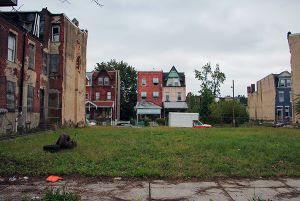
Bob stood looking at this grandiose question mark of an edifice. He stood on the sidewalk at the intersection, gazing across the weedy, trashy expanse that used to be an oversized bank headquarters before being demolished several years before in the latest round of urban metamorphosis.

He zipped his coat up higher over his neck area as a cold wind gust shot out of the north, and started marching hesitantly toward the building, wondering if he had the right address. He squinted and scanned the topography ahead of him, searching for the typical sign that he had expected to encounter- for rent, leasing, now available, going fast. But, he didn’t see anything. That didn’t sway him enough to abandon his mission, so he kept shuffling his feet forward in his soft, amorphous, billowy shoes, moving ahead.

He searched his pocket for the slip of paper on which he had written the info for the apartment, but it wasn’t there, most likely having been left on his end table before leaving the house- their house, the one he and Carol had shared together during 27 years of marriage. Now the rooms were cluttered with boxes of stuff as Bob made preparations for moving out, if only temporarily as had been decided.

Not having found the paper in his pocket, he paused and glanced around again, his eyes squinting and his mouth agape, looking like some 21st Century version of Henry Fonda or Jimmy Stewart, bewildered in a stark tableau of black and white, the wind blowing as everything familiar dissipated into the atmospheric fog.

Well, at least it’s not one of those new constructions, Bob thought, with a ridiculous name like Prairie Flats or the Isaac or Origami. He wasn’t sure what kind of place he wanted to move into, as no conceivable option seemed to click in his ongoing mental processing of the situation.

He and Carol had come to an impasse in their marriage- 27 years of intimacy mixed with the unavoidable brusque bitterness of trying to inhabit a shared space, compounded by the usual tests of time, and the unusual ones as well: depression, self-doubt, COVID, George Floyd, social media, 09/11, Amazon; all of the subtle yet diabolical forces swirling in the air outside the window and seeping in through the cracks.

It was only temporary, they had decided, and Bob was unsure whether to hold out hope for a reconciliation with Carol, or to turn and face the future and move on. He couldn’t decide what to do, what he even wanted to do. He had already, prematurely perhaps, signed up for an online dating app, but had deleted it before undeleting it, and then deleting it again. Meanwhile, the building stood before him- a mish mash of stucco, transit siding, stone, brick, even some kind of red plastic polyurethane material that framed the windows. It was quite ugly, but Bob had an appreciation for these kinds of buildings; a soft spot for people, places and things that didn’t know what they were, or wanted to be. He at last saw a small sign in one of the windows- For Rent- and he rung the doorbell and stood there with his hands in his pockets, waiting.

Pre-dawn Special

The clanking noise was driving me mad. It seemed that every morning, as I customarily awoke before dawn and then fell back asleep, only to repeat the cycle several times before finally fully re-engaging with the material world, I would lie there and hear the sound of a train going by, the low growl of the wheels on the track and the metallic, rhythmic clank of whatever it was on the train that made that sound. I could quite clearly hear that old iron horse passing by under the pinkish cloudy sky of early morning.

Strangely enough, my little cottage was not located near any railroad tracks. The closest line was at least a mile away and no longer in use, or so I was told. Coincidentally, according to some research that I conducted at the public library, there might have been some old trolley tracks lain beneath the asphalt of the roadway that went by the cottage, but that obviously had not been heard or seen from since they paved over them a hundred years ago and shipped the trolley cars down to Mexico, where they’re still in use, or so I’m told.

So, from where was this sound emanating? Or, from whence? It was not loud nor abrasive as such, just a low volume yet clear and distinct collection of sound waves, indicating a train, a freight train perhaps. It might have been mistaken for the sound from a pre-programmed alert that might come from a computer or some other device; easy enough to do these days- wake up to the sound of a train going by- if that’s appealing to you as a way to start your day.

But impossible in my case, as I had no computers or electronic devices, and all of my clocks were mechanical in nature or were simple, primitive electronic contraptions that were only capable of buzzing or making basic bell sounds. I had not one train sound available, or any other type of audio file for that matter.

My grandma got spooked when I told her about the train sound. She was really shaken and said that it was the sound of death and dying, someone coming to fetch some poor soul whose time had come, and carrying them home, seemingly on a bed of coal or in an otherwise empty boxcar, so I imagined.

My grandma thought it could be coming for me. She said a lot of prayers and put out some things: offerings, substances that I had no prior knowledge or awareness of; as a way to protect me, she said. And once the train sound kept happening every morning and I didn’t go anywhere- I was still alive, meaning- she concluded that her interventions had saved me and the train was going to go find some other poor soul to carry to the underworld, because down below is really the only place a train can go; not up, up and away. If someone was glory bound to the good place, I think they would send a hot air balloon or something like that.

Meanwhile, that train keeps chugging along every morning at about half past five, and I’m still alive.

Check it out

It was not too long after the Colorado River had finally dried up that the new governor of Arizona, a six year-old boy named Mikey, had organized a militia to drive northeast into the Great Lakes region in order to finish, by force if necessary, the pipeline that would pump fresh water down to the desert two thousand miles away. Even though their home state had turned into nothing more than a cracked, forlorn, arid landscape littered with bones and empty plastic bottles, Mikey and his followers still clung to some innate belief that Phoenix was where they wanted to be, where they were meant to live, in fact, and something worth fighting for.

Due to the power grid being inoperable, it was a bit tricky for Mikey the governor to get messages out and coordinate logistics amongst his militia, who were mostly guys named Mike who wore mustaches and drove large pickup trucks. They could still get gas from a well that they had dug years ago that somehow had struck an underground deposit of oil which was refined into gasoline through unknown processes that occurred as it traveled up the pipe to the pump.

For their trip up north, however, Mikey had decreed that they would use the self-driving cars which they had removed from the abandoned Tesla factory. Governor Mikey had scrawled a message in his six year-old handwriting onto a white sheet which he attached to a flag pole at the sulfur springs, the only place for hundreds of miles where water still trickled out. Meet 4th of July to go north, the message said. Below that simple call to arms was a block of letters printed large, in red ink, that said “Brought to you by Amazon.”

Even though there was not much of a population left in the southwest, most of the residents having fled north once the climate catastrophe had entered its more critical stage, and despite the fact that there were no signs of commerce to speak of, hardly any electricity or gasoline, in fact, evidence of total societal collapse was everywhere, somehow, there were still Amazon delivery vehicles moving daily throughout the deserted boulevards of Phoenix and the surrounding suburban sprawl. 

There must have been still some semblance of a population left there hidden away in remnants of homes that could somehow still be cooled to below 100 degrees Fahrenheit, or, perhaps, there was no such population and Amazon just paid to keep the trucks running in order to project some potemkin-like image of security and sanity within an obviously broken and deadly situation. Only Governor Mikey knew the answers to those questions and he wasn’t talking. In fact, he really didn’t know how to talk all that well yet, his parents having died years earlier of heat stroke and his speech therapist having fled to Kamloops, BC. 

Mikey was almost completely incomprehensible when he spoke and his chicken scratch handwriting proved very difficult to decipher, even when printed in big letters on a giant canvas waving in the wind above the trickling sulfurous water spring that lied within the former botanical gardens. That’s what his militia used as an identifying trademark, that only they possessed the ability to understand what Mikey was saying or writing. Maybe they could or perhaps they were just pretending. Either way, here they were, gathered together in a golden horde of broken-down self-driving vehicles heading east down Route 66. The whole trip was sponsored by Amazon, although the promised privations and cash payment had never materialized. By the time the group arrived in Minnesota, there were only a few militiamen left, the majority of the vehicles having caught fire and exploded on the way.

Mikey was among the survivors. He directed his small group of followers to their local contacts, a successionist millennial cult housed in a trailer park outside of Finlayson. They had no leader, as they were ironically democratic and inclusive, a cult without a messiah figure. They were enthralled by Mikey and his followers, having communicated with them via ham radio over the past year. Now, they stood outside the trailer staring at baby Mikey and his followers, all six of them. They expected a horde of thousands, or at least hundreds. But here was a ragtag handful of Arizona white-trash, descendants of Apache killers and insurance fraudsters, having survived for centuries in the southwest sun through swindling fellow citizens, sucking on chili dogs in the 7-11 parking lots at midnight, plotting their takeover.

Minnesota had also been impacted by the climate crisis, of course. The woodland forests had been transformed into an arid landscape of scrub brush and buckthorn. But, there was water. The cult members guided Governor Mikey and his militiamen to the banks of the St Louis River, still rumbling along with fresh, cold water. A flock of whooping cranes danced and dived overhead. Mikey turned to his right-hand man to ask him to set up the boring tool that would secure the pipeline to the river bottom, the pipeline they intended to stretch across the plains, across the mountains and beyond. The pipeline that would deliver water to the survivors back home. It was Mikey’s dream to see the megalopolis restored, with ornate fountains and golf courses everywhere, just like before.

Mikey’s right-hand man didn’t have the tool, so he turned to the man standing behind him, who, not having it either, turned to the man standing behind him and so on until the last man, a tall fellow with a yellow bandana tied around his neck, turned around and saw no one else there. Mikey stared at his crew in disbelief. The cult members hung their heads and turned to go home, while Mikey launched into a scolding tirade aimed at his incompetent men. No one understood a word he said, but the meaning was clear. They could turn and go back to Arizona empty-handed or else stay in Minnesota and blend into the local population until they were able to rise up and realize their plan and build the pipeline. 

The other option was to cross the river over into Wisconsin where they were more likely to find followers, like-minded folks who would join their cause and become accomplices to the water theft, perhaps lured by the promise of a new Jerusalem in the desert, restored to grandeur and complete with marble fountains, flashing neon signs, golf courses and big hamburgers. They waded into the river, heading toward Wisconsin.

Chrysalis

Eagan, Minnesota was nothing but beautiful rolling hills, dense forest and verdant river valley back at the turn of the 19th century. After pushing the Indians out, the rugged mish-mash band of settlers, who had been squatting at the fort for years, began to venture beyond the line and stake their claim to the now available land, once the danger of being dealt a hatchet blow to the forehead had passed. These folks started clearing trees and didn’t pause for more than a second or two to contemplate the history of the place. They saw an opportunity for themselves and got right to it. 

Big band saws were good at felling the trees and having a few pack animals on hand didn’t hurt. They tilled the ground and planted crops and figured out how they were going to make a go of it. The fort was just across the river and it was easy to go there and sell some meat and produce, buy provisions, steal a few things here and there, and start growing a homestead. Babies were born. People got to know one another. Feuds were started and settled. A community was formed.

The ground was fertile and families were mostly having success in growing crops, onions in particular. Onions were the currency of Eagan, just as tobacco had been the currency of old Virginia in previous times. All the families kept planting plenty of onions, red ones, yellow ones, white ones, too. They sold them at the fort, where they were loaded onto boats heading south, downriver. Those folks down in St. Louis must not eat nothing but onions, everybody thought. It certainly wasn’t as lucrative as oil, but a big barrel fetched a few dollars and that was enough to get ahead. 

However verdant and lush the valley, and however well-meaning and hard-working the people who populate it, a place is doomed if built upon hazardous foundations. Soon enough, the cracks started to show and things got a little weird. The ragtag band of soldiers and settlers that settled there were mostly either drunkards or fervent Christians, or sometimes both. Soon enough, they started turning on one another. Misunderstandings germinated and were not resolved. Plants did not bloom. The few trees that were left standing after all the timbering was done were stressed and wilting. And before long, the bottom fell out of the onion market due to a rumor going around that onions made one ornery and constipated. Huge piles of unsold rotting onions dotted the landscape, carmelized by the sun.

Mary Klondike gave birth to her thirteenth child on a hot summer night at the end of June. She named her Chrysalis, as a way to honor the monarch butterflies who frequented the area every summer, laying eggs on the underside of the milkweed leaves. The summers were nothing but wave after wave of insects: Flies, moths, mosquitos, dragonflies, locusts, caterpillars, bees, wasps and even chiggers. Every April, as the last of the snow was still melting away, the townsfolk of Eagan would come out of their little shacks and start to till the ground and get ready for the growing season. But, soon enough, they were chased back inside by the bugs.

Chrysalis, or Crissie as she was called, didn’t care about the bugs, and, in fact, she seemed immune to them. Others in her family would be itching their skin all night, full of bites, but Crissie was somehow able to avoid being bitten. She could go out at night whereas others could not. So, as she got older, she was entrusted with all nighttime outdoors activities. Go fetch some wood, bring that corn to the crib, get the cows in the barn, let the dogs out, bring in the milk, it was all entrusted to Crissie so the others wouldn’t get ravaged by bugs. 

The best time of year were the nights around the Summer solstice. As a family, they liked to hike a half mile or so to the top of the ridge, overlooking the river, facing west. The stars would slowly come into focus as the sun set in a majestic crimson display over the horizon. They would spread out their quilt and watch the magical celestial spectacle as they ate watermelon and practiced their arithmetic. But after a few years, the bugs got too thick and the family stopped going on these crepuscular treks. 

Although the town was struggling, more people kept arriving. Bigger and bigger clouds of mosquitos kept arriving as well. Trouble persisted in the little settlement of Eagan. Again, no one was allowed outside but Crissie. She started to hike by herself, not only to the top of the ridge, but down to the river as well. Sometimes she would see a boat going by, everything from big packet steamships to the one-person canoes that the Indians still used to get up and down the river under cover of darkness. For the most part, however, she was alone and that’s how she liked it. She ruminated a lot, and sometimes there’s not much one can do to control that. She climbed back up the hillside after a while, not even carrying a lantern because her night vision was so good.

In early September, locusts came and set upon all the crops, devouring everything. It was incredibly hot and smoky outside as well. Some brutish German immigrants, recently arrived from Saxony, had set the woods on fire trying to clear some land for planting and grazing. It quickly spun out of control. A large swath of the forest was burning, which seemed to drive the locusts out, but also was incinerating most of the remaining trees and infesting everyone’s home with smoke and ash. Crissie, exhausted and uneasy, retreated once again down to the riverbank for respite. She sat there all one cloudy afternoon, ruminating as usual, watching the locusts fly away through the smoky haze. 

Deep in her thoughts, she thought she heard someone, or something, say, “Eat that mushroom.” She hesitated for a moment, before looking around, bewildered. She spied a beautiful bespeckled mushroom growing out of a log right down past her bare feet resting upon the damp sand. Again, she heard a voice inside her head. “Eat that mushroom.” it said. She instinctively glanced to her left toward the river bank, and saw a small marten there, staring at her. She looked at the marten, somewhat convinced that the voice she had heard in her head was from that creature. The marten stared back at her.

She hadn’t eaten anything all day, since the locusts had pretty much destroyed everything. She had heard that some mushrooms were quite delicious and she had eaten quite a few in her brief lifetime, so she quickly ripped it off the log and plopped it in her mouth. It tasted like dirt, mostly, but she didn’t mind. She was hungry and it went down quick. She looked around trying to find another mushroom to eat but didn’t see any, so she glanced back at the marten, who was now gone.

Crissie laid back down and felt a stirring in her stomach. She saw intense and vivid lights in her head and felt a transformation taking place in her body. She felt weightless, like she was floating, and she could smell everything for miles around. She had been transformed into a monarch butterfly and she soared and flitted about high above the Eagan settlement. But she could see things looked a lot different, as if the mushroom had transported her through a time portal. The Eagan she flew above was no longer the same.

For one thing, the beautiful and varied landscape had been replaced by endless fields of corn and soybeans. Millions of rows of these two plants stretched as far as the eye could see. These fields were criss-crossed by roads packed full of countless Amazon delivery vans, rolling slowly in all directions, pulled over to the side of the road, flashers on, packages spilling out the side. Crissie, the monarch butterfly version, darted over her little town, looking for the places she knew, the little wood homes and sheds of her family and neighbors, but she did not see them, nor did she see her little walking paths and hiding places down by the river. These had been replaced by large corporate fortresses with stern, dark-hued, menacing buildings and finely mowed monochrome lawns, lighted towers, concrete barriers and acres of parking lots.

“Oh, how I long for the days of yore”, Crissie said to another monarch as it swooped past her. 

But it just kept swooping and didn’t bother to answer, landing on a nearby bee balm plant. “At least there’s still a little bit of wild left.” Crissie said to herself as she continued to survey the town. The magic mushroom had blurred her vision a bit and things were not as sharply in focus as she was used to.

She found her way down to a milkweed leaf and quickly fell asleep as an orange waning moon rose in the western sky. When she awoke, she was back in human form and surrounded by deer. They were all laying down, huddled together in a big, warm cluster. They gazed at her as she raised her head, licking her lips. She was no longer a monarch butterfly, but she was still thinking about nectar, and how tasty and delicious it was. She stumbled her way back home and found that her family had sold the house and moved to Montana, leaving her all alone.
Down the Lane

Once the spasms had subsided, Nick took a breath and then sneezed into the clean shirt that he held in his hand and was just about to put on. “Jesus Christ, Nick, not into the shirt. You imbecile.” Margie threw down the lily of the valley bouquet onto the small kitchen table. She had just been holding it, admiring it, arranging the stems and making sure all of the pretty white bells were visible in her arrangement. Now they lay there on the table, all undone.

Nick blew his nose into the shirt and tossed it into the corner of the room onto a small pile of other soiled clothing, and went to look for another shirt in his suitcase. The motel room was pretty small, so all he had to do was turn around to the luggage rack behind him. “Imbecile?” he snarled. “I just sneezed. You don’t want me to sneeze all over them flowers, do you?”

Margie went into the bathroom and looked for some lipstick. She looked at herself in the mirror while Nick fished out a new shirt, wrinkled as hell. “Who else is going to be at this wedding?” he said loudly towards the bathroom, but got no response. He grunted and tried to smooth the wrinkles out of the striped polo shirt. He laid it on the bed and tried to stretch it out, running his arm over the top. His nose was running due to his allergies. That bouquet must have set him off. He resisted the urge to throw it into the garbage. He didn’t want to get called an imbecile again, and he did like the look of the plant, the shimmery green leaves and the soft lacy white bells that hung upside down from little tendrils that grew out of each leaf. He sneezed into his suitcase as Margie came out of the bathroom, looking like a clown, he thought, with all the extra makeup on her face.

“Let’s go.” she said. “Put your damn shirt on and comb your hair and let’s get moving.”

“What about them flowers?” he asked. He started to gather them up, but she swatted his arms out of the way and picked them up herself, rearranging the leaves into a symmetrical nice-looking presentation, which she snapped together with a rubber band. “Oh yeah, you used to work at the florist a while back. I guess that’s where you learned to do that.” Nick said, trying to sound nice and get things between them into a zone that consisted of a lot less animosity. “Anyone with a half a brain can arrange a bouquet, honey.” She replied as Nick grimaced. Well, at least she said honey, he thought, maybe she’ll get into a better mood once we get out of this dump.

Something about the scent was pleasant to Nick, who usually was not very aware of things like that. Even though it was causing his nose to run, he liked looking at the plant as Margie arranged the bouquet. He didn’t realize it, but the plant was making him feel better about the day. He put on his wrinkled shirt and they exited out of the motel room and let the door slam behind them. The sun was blazing down and there was a haziness to the air due to some wildfires out west of there. They got into the car Nick had rented with a fake credit card, Margie behind the wheel, and they headed to Margie’s daughter Hanna’s wedding. It was to be held at a farm somewhere not far from where they were staying at the Falls Motel.

“Don’t anybody get married in a church anymore?” Nick asked the universe, as they pulled out of the parking lot. He pulled out some directions that he had scribbled onto a page that he had ripped out of the Bible he had found in the motel room nightstand. “All right, just keep going on this road for a while.” he said, trying to figure out the directions he himself had written just the night before. “Just put it into your phone, you numbskull. Who writes down directions anymore? On a page ripped out of the Bible, no less. You’re for sure going to Hell for that.” Margie said and snorted a big laugh, the kind that always made Nick tense up every time he heard it. They’d been together for 13 years and that laugh always made him cringe, but it was better than her yelling at him, so he did his best to not let it bother him.

“I am not looking at the phone. You know that.” He replied. “I got the directions right here.”

They motored down the two-lane county road as the buildings of the town turned into cornfields and empty meadows. Margie’s daughter Hanna was not a big fan of Nick, he knew that. And Hanna’s father would be there, and that made Nick nervous, for he knew Margie would either be flirting with him or else treating him like shit. Or perhaps, a combination of those two things, sequentially. He wanted to make a good impression, be a good guy, make people laugh, make Hanna like him. He didn’t want to be blowing his nose all day with little wrinkled tissues that he pulled out of his pocket, but apparently that’s what was going to happen. 

The lily of the valley bouquet filled the car with an aroma that recalled a stroll down the lane back home where Nick grew up in a small town in Maryland. It made him think of his childhood, which immediately called to mind two distinct memories. One was his Dad yelling at him for not wanting to play baseball with the other kids, and the other memory was of his sister Suzie as she smiled at him once while they joked around while walking home after school. He didn’t know why, but these two scenes seemed to pop into his head whenever a certain sound or smell took him back to his childhood and walking down the lane.

After a wrong turn or two, they finally found the farm and pulled onto the lawn where all the other cars were parked. Nick popped in a piece of nicotine gum and Margie reapplied some lipstick. Then, they got out of the car and headed towards where all the people were gathered outside an old barn that seemed to have been recently renovated and made to look a bit fancy while still maintaining it’s old rustic appeal.

“When are we going to get married, babe?” Nick asked as he put his arm around his girlfriend. “Oh, you know I love you too much for that, silly. Why ruin a good thing?” They got to the clearing where everyone was seated as a small chamber ensemble played under the shade of a blooming dogwood tree. The ceremony had begun and Hanna turned to look at her mom and gave her a look that said, “You can’t even be on time to your daughter’s wedding?”  Margie, nonplussed, smiled and waved. Nick sneezed into his coat sleeve. Everyone turned to look. “Jesus Christ.” muttered Nick. “It was just a sneeze.”

The music transitioned into the wedding march and Hanna took her father’s arm and stepped slowly down the shortly-mown grass of the aisle, which had been adorned with daisies and daffodils. Hanna’s wife-to-be waited by the altar, which was really just a table with a beautiful bowl and some floral arrangements on it. No sign of a priest anywhere. The wedding official was wearing what looked to be a Hawaiian shirt. Everyone was smiling. The air smelled wonderfully fragrant and some bees buzzed around the flowers. Margie suddenly remembered the lily of the valley bouquet that she was carrying and looked for a place to set it down. She admired the beautiful white bell-shaped blossoms and smelled them one more time. She thought of her mother, long since passed away. She remembered her mom giving her a hug and a kiss one day when she was just about seven years old, after having fallen down and scraped her knee. She smiled and placed the bouquet in a spare vase that she located on the gift table and looked up just as her daughter said, “I do.”

Spring Migratory Bird Traffic Jam

“This is not even close to being ready!”

“Did they know we were coming? They knew we were coming, right? Did you tell them that we were coming?”

“Oh my God. Seriously! Will you stop, please? We come every year. We don’t have to tell them.”

“Maybe they forgot. You could have reminded them.”

“Nobody needs to be reminded. Check-in time is just a ballpark figure, I suppose. It varies.”

“Ballpark? Yes, I would love to go to the ballpark and nibble at some peanut shells and hot dug buns. Let’s do that.”

“Ballpark, meaning just an estimate. It’s in the ballpark. You never heard that term before.”

“Oh, you and your terms. Just once I’d like to get through an entire migratory journey without you spewing out your similes and eponyms.”

“Oh pardon me for using expansive language. I didn’t realize it was so offensive to you. Anyway, it’s not ready. There’s still too much snow on the ground. What do you want to do? Go get lunch somewhere? Go to the ballpark and see a game? What?”

“Well, you know that there are two things I like to do in Duluth. One is go mess with the seagulls down at Canal Park. You know, poop on their food, fly by and peck at their eyes. Stuff like that.”

“Well they are obnoxious and I love doing that too, but how about something a little quieter? What’s the other thing you like?”

“I like to go to the Ballpark and get sunflower seeds.”

“The baseball season ain’t started yet. Remember? That’s why our room ain’t ready yet.”

“You mean the season hasn’t started yet and that the room isn’t ready. You tend to alternate between your treasured expansive language and intentionally bad grammar.”

“OK, whatever. How about we just go downtown and make fun of the pigeons. Have you seen how their heads move when they walk?” 

“Dearest, I agree that both the gulls and the pigeons are rather hideous creatures and not at all comparable to us. However, they are both members of our avian species, so please keep that in mind. We must all stand together.”

“You mean fly together.”

“Can you please stop correcting me every time I speak?”

“See what happens when some obstacle comes up and gets in our way? We start arguing. If the place was ready, we wouldn’t be bickering like this.”

“Well then, it seems to me that we need to keep in mind what we learned at the seminar down south this winter. Do you remember?”

“You mean the part about the breathing? Concentrating on our rear air sacs?”

“Yes, that and also being aware of the things that one can and can not control. Spring is late this year and we need to accept that, not fight it.”

“It will give us more time in Duluth.”

“More time to mock the pigeons and gulls.”

“More time to eat bugs.”

“More time to watch the sunrise over the lake.”

“Oh brother. So hopelessly romantic.”

On the Banks

Down on the river banks, it was finally springtime, although some days it was difficult to discern as such, with the overcast skies and swirling wind the frequent markers of most days that season. Most of the powder works men and their families didn’t mind this so much, as their days on the farm back home were a not so distant memory. Without the worries of crop planting and herd protection, they didn’t give the weather much of a thought anymore. Most of their time was spent in the mill, ten hours a day, or else at home in their company housing, eating, relaxing and attending to family matters.

The only day the weather mattered much at all was on Sunday when the folks in the “village” would make their way across the river and to the parish for Mass. After Mass, if the weather was pleasant, some families might feel the urge to take a stroll in the park or even set out a blanket and have themselves a bit of a picnic. Once in a while, the ladies might take the streetcar downtown for some shopping, but most of their needs were met with the goods available to them at the company store along the river banks there. It was not so bad a life, considering the alternatives available to them at the time.

That winter it was so cold for a spell that the river froze over and some of the gents could be seen fashioning ice skates out of discarded powder kegs and metal bolts. It was all very enjoyable until one of the Kearney boys fell in to the river through some thin ice and could not be retrieved before expiring beneath the icy waters. They had eventually recovered the body later that afternoon and had a wake for him to see if he might still have some life left in him. The company doctor came to kindly offer his services, but there was nothing that could be done by that point. There was a lot wailing and eventually, as morning broke, celebrating the brief life of the poor lad. It was a terrible day, that was, and the family was still grieving as one would imagine. That was three months ago in mid-January and now that April had arrived, some residents of the riverbank millworker town tried to cheer each other up and look forward to the warmer weather ahead.

It was still too early to plant potatoes but some ladies began to think about planting a few things in the little plots behind their houses, or going down to the riverside and harvesting the wild ramps that were sure to come out soon. In the Gallagher household, they were getting excited, and worried about the upcoming wedding. Sixteen-year old Ellen had met a man in the park one day last fall, a man from the same County as them back home who worked in one of the leather factories downtown. He had taken quite a shine to her and after visiting the household on St. Patrick’s Feast Day and seeing the family in church every Sunday, Mr Gallagher had given his consent and the wedding was set for June 1st. Of course, off the record, it was Mrs. Gallagher, the “bean a ti”, who had the ultimate authority of approval and though she hated to see Ellen married off and moving out of the house, she had five other children to worry about so no sense putting up a fuss about Ellen, and she did like the man after all, though he was a bit too quiet.

Mrs. Gallagher had taken in a couple of boarders over the past year and Ellen leaving the house would give her the chance to take in one more. That extra money that came from the rents those fellows paid would help the family as they were saving up for the weddings of a couple of the other children that were sure to come soon enough. More people were arriving every week it seemed as more and more families sent for their brothers and sisters back home. The company man always said, “the more the merrier”. He was such a kind fellow, and even the men with their natural skepticism and standoffishness had eventually given in to his charms and took him at his word, especially since he was loaning the families the money to bring their kinfolk over as there was no work back home for not one of their kind. 

The Gallaghers had even saved almost enough to get themselves a rowhouse away from the riverbanks. Besides the high wages due to the dangerous work, the company even provided the mill workers with interest bearing savings accounts which allowed them to capitalize, even just a bit, on the money they had saved. But Mr. Gallagher had been planning to have his sons work somewhere else besides the powder mill. Just last week, a young lad by the name of Patrick Toomey had lost both his legs in an explosion and now he was lame, unable to work and just sad as doom, sitting out on the porch in his wheelchair. Besides Toomey, there were others of course who had been caught up in an accident and he couldn’t imagine the thought of something like that happening to Thomas or John or Patrick. His wife had softened him up one Sunday so he would not put up much of a fuss when she bought the new tea set down on Market Street. But that was it, he thought, we have to save up to buy ourselves a proper house in town and no more spending. The tea set was rather nice, though, and he didn’t mind showing it off when they had guests over.

On Saturdays, if the men were playing cards and they had something to celebrate, the cups would be filled with whiskey after the first couple of cupfulls of tea had been consumed. And that was OK, as long as Mr. Dougherty was not in attendance as he tended to have quite a high threshold for drink. Now, with the wedding not but six weeks away, the family stopped having company over and buckled down. There was a lot to be purchased and plenty of preparations to be done. “Marry in April when you can, joy for maiden and for man.” Mr. Gallagher said to his wife as they sat down to supper one day after a long day of work.

“What’s that, then, John?” she replied. “You know that the wedding’s not until the First of June. And, be that as it may, I trust they will be happy nevertheless, don’t you?” Mr. Gallagher finished chewing his roast and grunted his assent. His wife continued, “You and I got married in a dirty old barn in the middle of winter and we managed to do OK for ourselves.” 

“I would chalk that up to the blessing of our Lord.” Mr Gallagher replied, gesturing to the crucifix on the wall next to the kitchen table. “And don’t forget about the horseshoe above the doorway, it’s brought us a good life and all of these children.” 

“Aye.” John Gallagher replied in assent once again. 

He was not much for words, but he was a good man and a happy man, and he looked forward to the wedding day when he and his wife would be able to celebrate in fine fashion. Then, on that day, he would have plenty to say. He went back to the bedroom and said his prayers, asking the Lord for protection of his daughter Ellen in her future life as a wife and as a mother. Times seemed to be changing fast, but there was still not much else for a woman to be than a wife and mother. And, being that she would turn seventeen the following month, she was ready to take on those roles.

Aries the Ram

It was the Spring Equinox and the Sun was finally back into the northern hemisphere. On the days when it wasn’t too cloudy, the rays felt warmer and gleaned brighter. There was still about a foot of snow on the ground, but even that helped to reflect the rays and brighten the sky that much more. However, it also meant that the winter maker was not ready to leave his perch just yet. He had grown quite comfortable over that past five months, and was quite reluctant to grab his things and go to hide away for a while, as he was supposed to do this time of year. He had enjoyed a good year. He made a lot of snow fall. His big pale blue eyes were joyed to see the sheets of ice across the land reflecting back to him as he gazed down from his perch on high. He had made the wind blow on and on, and it felt good on his face. He did not want to go just yet.

A couple weeks passed and the old man finally got tired and grumpy. The piles of snow were dwindling as the air warmed up and he realized that there was nothing he could do about it. He gathered his things and started to make way. Down below, as the snow piles diminished bit by bit, the people in the town started getting up and about. At one house down at the end of the lane, a man was inspired to look out the window, after several months of not caring to do so. He saw something strange out in the back yard. Poking out of the snow drift were three or four heads. It was hard to tell. As it melted more and more each day, he could see that there were four heads. One was a ram with big round horns that were formed on each side of his head, which resembled two nautiluses that had just launched themselves out of the ocean and were trying to suck the ram’s eyes out right through the cranium.

I see four heads, the man told himself, as if to document the occurrence verbally. A ram, a stag, a snake and an old woman with a scarf over her head. As the snow melted further, he returned to the window every day to see how much more of the objects he could see. He didn’t know if they were alive or just statuary, or from whence they had come, for he had lived there for generations and never once had he seen anything out his back window except some of the common beings one always sees, like some robins and chickadees, finches and warblers, rabbits and squirrels. So, this was new and he didn’t know what to make of it. Sometimes he thought he saw them moving and that made him sure of their animacy, but then when he looked again it seemed like they were still.

Stranger still, as the snow receded, the man could see that below the heads were human bodies, all except for the woman in the kerchief, as her body seemed to be akin to a boulder. 

The man could not hear very well, so he did not know if there were any sounds coming from the area back there behind the dead elm tree where these figures had appeared. He was afraid to go out and get a closer look. As the snow melted further, he could see several structures come into view as well, shelters woven of twigs and leaves, tents, shopping carts covered with tarps and blankets. He finally felt comfortable, or perhaps, desperate enough to get help and called his wife and child over to the window to take a look.

His child was born mute and could not speak, but could see many more things that had not been originally noticed by the old man, The wife was blind, but she could hear the low rumbling sounds and low chatter of conversation coming from the clearing behind the tree, whereas the others could not. At nightfall, with the waxing crescent moon hanging low in the western sky right above the guiding light of Venus, the three of them were filled with a sense of daring and purpose. They grabbed some flashlights and headed out the door to investigate.

They trekked through the slush towards the four figures. The murmur of desperate voices was very clear to the wife but inaudible to the other two. The child saw everything clearly and registered a lot of things tossed about in the mud and melting snow. It was very dirty and smelled bad as well. They could all recognize that. It soon became clear that there were more beings back there, little people that were scattered around on the ground, or huddled under blankets beneath their improvised shelters. The ram, the stag, the snake and the old woman were moving for sure, their heads bobbing and their eyes gleaming. The wife could hear them talking. The man, wife and child stood there a few feet away, taking it all in, and wondering what it could mean. Who were these creatures and why were they here. Why did the camp seem sad and desperate? Why was there a sense of death and foreboding, but also an unmistakable vibrancy, as if the inhabitants of the encampment were desperately clinging to life and yet wringing everything that they could out of it before it was gone.

The blind woman suddenly said “yes, OK.” And approached the old woman with the scarf kerchief and the boulder body. The two of them talked and nodded and laughed as the husband and child held back, shining their flashlights around and trying to ascertain what it was that was happening in their back yard. They had heard about the homeless encampments that had been popping up all throughout the town, growing and growing, getting flushed out of one place only to reappear in another similar space down the road. These were hard times and many citizens had been left without a home to call their own, relying on donated food, scavenged items and numbing narcotics to survive the harsh conditions; the wind and icy cold, isolation, lack of funds, psychic pain, emotional distress and otherwise. After a while, the wife let out a loud sigh and turned around to beckon to the other two, bidding them come forward. They warily approached and then the three of them walked warily through the encampment.

The child led his mother by the hand as she related to them what she had heard from the old woman, who was known as Cailleach. It had been revealed to the wife that the four beings at the front of the camp had all recently fallen upon hard times indeed. Quite literally, as they had all fallen from the sky, having been evicted from the astral plane for having overstayed their welcome. The four of them were all winter gods, older than the hills, who possessed power to shape the earth and the destiny of all beings who trod upon it. Besides Cailleach, the other three were Aries the Ram, Kukulan the Serpent and Wapiti the Elk Stag. There had been a fifth companion, another fallen God of winter that arrived with them, but who had unfortunately succumbed to addiction upon arrival and had overdosed on fentanyl. Even Gods struggle, Cailleach had told the wife. Look at us here, discarded and forgotten, no one looks after us.

We were worshipped for millenia, the Cailleach had said, as her three companions bowed their heads and stared at the ground, embarrassed and ashamed. Then, we fell from the sky because no one prayed to us anymore. No one put out offerings to us, thanked us for all we had done. No one even got mad at us or scolded us for their suffering, which was OK to do. We liked that as well, for it meant that we mattered. But now, it’s like we have been forgotten altogether, and one day we just fell to Earth down into this camp.

We don’t need to be worshiped; Aries the Ram suddenly averred. Maybe that was a bit too pretentious. But how about just a little bit of attention? A hot meal and a shower would be nice. Some acknowledgement of our existence perhaps, would that be too much to ask for? Kukulan and Wapiti nodded their heads in agreement.

The wife told the husband and child all that she had heard, as they traipsed among the encampment residents, both human and non-human, sprawled upon the ground wrapped in blankets and sleeping bags that were torn and stained. Maybe we can start a Go Fund Me page, the child suggested. The husband shook his head. I don’t think that’s called for here. We can’t solve this problem with money, Spring is here now. Who knows? Maybe these winter gods come down here every year during their off season and we just never noticed them before now. They’ll go back to the sky once it’s their time again.

The wife shook her head and spoke again. I suggest that we build a fire and give thanks for the Spring. I suggest that we bake some bread to celebrate our gratitude, lots of bread, and we can bring it out here to the camp and share it with everyone. We will plant wildflowers and put out offerings to the Sun and the Moon, and ask them to take back their fallen angels, take them back into the celestial plane and restore them to their rightful positions. And also, the child added, we will ask forgiveness for our own selfishness and ignorance, and we will ask that the people in the encampment be provided for and taken care of. Along with the bread, we will make a big pot of soup and bring it here and share it with everyone in a feast of gratitude and celebration. The three of them turned and walked back home to begin preparing the meal.

The wind that shakes the barley

The little boy was born in a small house at the edge of town, no doubt a previously made arrangement between the mother’s family and the owners of the home, who were most likely kinfolk of some sort, or perhaps just close friends, a midwife was involved perhaps. Who knows, since there are no records, written or oral, to assure the facts. It was summertime, so the weather was pleasant, unless it was raining. The country was soon to go to war and the baby’s mama was soon to slip away on a train heading north northeast, to find work in a munitions factory.

Such it was that the little boy was raised by grandma, his papa being not present. And grandma was doing it on her own, since grandpa had died in the mine some 14 years earlier. She’d been doing it on her own all this time, raising four girls with no income to speak of. Luckily, they lived in a community of kinfolk and friends, who all pitched in and helped out as needed. All along the one lane road that led up towards the two mountains to the west, family had farms with animals and crops to share amongst each other, whomever needed it. They were family after all, and one did not survive in this situation for too long without family to help out when needed, just as they had always done for some 200 years now since their sole common ancestor had landed upon these shores, disembarking from a schooner on the Potomac River and heading down with the others to the land claim they had been given by who knows what authority. 

They took care of each other and they had love to give, which is not to say that they didn’t feud often and have their little tiffs. Of course, they did. But in the end, Alice was raising four girls on her own since her husband had died in the mine, and that was reason enough to help her out. Now she had a grandson, and the father was gone, been chased off, who knows what happened. But now this little boy joined the community and they had plenty to go around.

There were cousins to play with. There were some chores to be done here and there. He was well loved and looked after. He had some smart looking clothes that they bought in town that he put on when they took the train into Hinton or Beckley. Things were not bad at all. Then Mama and her sister headed out to work in the bomb plant, and grandma was the primary caregiver, although she had always had been since the little tyke was born. Soon enough though, as the war dragged on and more people left town to join the armed forces or to seek work in the cities, Grandma took the little tyke up north to live with her kinfolk up there in Ohio. He was about eight years old and he would spend the rest of his boyhood up there with grandma’s family.

He came of age in that quaint little Quaker town, but his spirit was not so quaint and unassuming. He had a chip on his shoulder, being a little hillbilly boy with no dad and being raised by his grandma, who spoiled him silly. He had developed into a strikingly handsome young man with an inner drive to make a name for himself. He liked fine clothes and his grandma made sure he had them, pressing his shirts and washing his pants daily, so that he could look his best, just as teenagers long to do, in order to be noticed, accepted, and, perhaps, desired.

And desired he was. Many girls at Salem High thought he was a real gone guy. Perhaps he had shed his Appalachian accent by then, or maybe he never had it. But he presented himself, in this little Ohio town, as a cosmopolitan, finely dressed bohemian type, with a love for fast cars and late nights and a girl on his arm. This was all working out swimmingly well until he started dating the judge’s daughter. They had some late nights out, with perhaps some carnal intimacy involved. Johnny was having a great time, but the judge had enough. Grandma was notified that the boy’s behavior was a liability and something needed to be done.

By this time, his senior year in high school, his mom had ended her term at the munitions factory and had moved northeast to the city and was working as a waitress. She had an apartment downtown, and was able to take her son back and have him finish out his high school senior year in the city with her. He drove his Oldsmobile through Pennsylvania and to his mother’s apartment building door. They had seen each other only sporadically over the past dozen years, so there was some emotional distance for sure. He finished up high school and then got a job as a salesman at a shoe store downtown. 

He was still disarmingly handsome and finely dressed, so the women took notice, and he eventually saw one that he liked. They would spend afternoons at the soda fountain or at the diner, going for a drive and getting to know each other. She was from a well-established Catholic family, so there was no messing around beyond a certain point. Once things got serious, a decision had to be made.  As things are wont to go, a decision was made for them. A pregnancy occurred and since they were not yet wed, she was sent away to Harrisburg to carry her pregnancy to term, while everyone was told different stories as to why she was away. Once she came home, after the baby had been given away, no one acknowledged what had happened or gave space for emoting and reflecting. That’s just how it was. Don’t acknowledge it, don’t think about it, don’t talk about it, pretend it didn’t happen.

Her and Johnny got back together, their love and attraction still strong. They ended up getting married, but by that time, their son had been sent away to an adoptive family and there was nothing they could do about it. They couldn’t get him back, let alone even know anything about him or where he was. Little did they know, he was safe and sound, growing up on a farm a mere fifteen miles away.   

The little hillbilly boy, raised by his grandma in an Ohio Quaker town, now married and living in a strange city, made his way. He and his wife had more children. They bought a house. He advanced in his career. They bought a bigger house. He advanced even more and they bought an even bigger house. They never talked about their first child, lost to the adoption system, but they made the best of what they had, doing well with three more children, until it all came crashing down, as fragile relationships tend to do, 

His career got torpedoed, his marriage collapsed, and he felt like he needed some fresh air, so he booked it to California and started anew, trying to hold it together. He never got a real job again, his aspirations having waned. He dealt dope to the corporate hippies and did the crossword puzzle. He thought about his children often, but didn’t do much more than that. He saw them on occasion. Then his second marriage came crashing down and that was just about all he could take. He was done.

Whoopie Ti Yi Yo

Bewildered, Gregory tried herding the cattle. They did not heed his calls. They couldn’t even hear them, since Gregory’s voice was so shallow. He knew this and tried to yell, but even his yelling was barely audible, even to nearby cattle who supposedly have pretty good hearing. It is well known that their strongest senses are smell, taste and touch, but they have pretty nice-sized ears that stick up a good bit, so they should be able to hear an able-bodied human shouting at them from nearby, but Gregory’s voice just couldn’t cut through. Greg himself suspected that it was more of a psychological problem than a physical deficit. His voice just couldn’t overcome his own innate desire to not dictate his will onto the world.

He knew that this was his job, to herd the cattle, and he wanted to do it well, by willing them to obey his commands. He really did try, but no matter how much he attempted to tweak his timbre, his volume, his tone, his frequency, nothing seemed to work. Ultimately, he just got frustrated and let the cattle lead him. If they didn’t want to follow him, then he would follow them. It was his misfortune, and no fault of theirs. They were bovines after all, and if they knew anything, it was how to eat grass and where to find more grass to eat. So, they ate up one pasture and then headed east to the next one. Once that one was nibbled down to the roots, they headed south to the next one, and so on.

Greg began to realize that the herd knew what to do on its own and did not need a feckless human in an ill-fitting hat trying to tell them where to go and when. But maybe that was just his way of rationalizing his own failures. Either way, it seemed to be working. The cows were healthy. None of them were running off, and no predatory animals were coming to feed off of the calves, although even Greg realized that this was perhaps just a matter of time. He had his .22 rifle slung over his shoulder, and was ready to use it. However, he doubted that if a pack of wolves showed up one day, that he would be competent enough to either kill them or make them run away scared. So far, fortunately, it was not a problem.

The herd was multiplying as time went on. They kept trodding along of their own volition, from pasture to pasture. Every night when Greg bunked down by his little fire that he struggled to keep alight, he conjured up a mental image of the herd in his mind. By the time he woke up at dawn, shivering and thirsty, he grazed out at the cattle and it always seemed that overnight they had added significantly to their numbers. The bulls strode around the perimeter snorting, as if they were proudly aware of their virility and wanted Greg to see how many more calves there were then since last time he took a gander. The herd was growing and sometimes Greg couldn’t even see from one end to the other. He felt lost. But, he also felt at peace, since the cows were doing what they were supposed to do, which was wandering around and eating, staying healthy, and not getting eaten by wolves or coyotes.

Greg carried a little penny whistle in his shirt pocket, as well as a chromatic harmonica in his backpack. He didn’t really know how to play either one, but he liked to pull them out from time to time and blow into them, trying to form some sort of melody by placing his fingers over the holes. Once in a while, he came up with something halfway decent, and was briefly satisfied, but it seems that he could never repeat what he had previously played that had sounded good.  This used to bother him to no end, but now he just shrugged his shoulders and focused on what he did come up with at each particular time. He learned to treasure the moment. “If I can’t remember it, I guess that just means I’m not a real musician, which is fine.” He told himself. “That’s just my misfortune and no fault of my own.”

Yet, as the days and weeks wore on, Gregory let his worries and anxieties fade away, one by one. The growing cattle herd seemed healthy and happy, and he himself was feeling clear-headed and confident. This was a relief to him, especially after the first few days of trying to control the cattle through his calls, which had not been in the least bit effective and had made him sad. Now, he was feeling almost content. But unfortunately, that feeling did not last for long, as he realized that his food was just about gone and he had no idea where he was. He and his herd of cattle had been traipsing across the hills for a few weeks now, and since the time that he had conceded his control, he had lost track of which direction they were traveling in and really had no idea where they were, and how long it would take them to get back to the ranch.

As he lay shivering awake one night, one teeny log being kept alight by the tiniest of flames, Greg thought about what he should do. He didn’t carry a phone with him, so there was no way to call someone, and he was not great about reading the stars, or the path of the sun, and figuring things out spatially that way. So, he fell asleep in a worried state of mind, trying to come up with a plan of action for the next day if possible. But nothing came to mind. He had nothing in his toolbox to draw from. He didn’t panic, however, and somehow kept the feelings of doom at bay. He eventually fell asleep staring up at the falling stars making their way across the western sky.

When he awoke, cold, tired and hungry, his attitude only worsened as he scanned out at the herd and saw that several calves had been attacked and eaten overnight. How could I have not heard that? he thought, and blamed himself for their demise. I was right here, he reflected critically, stroking his rifle. I could have shot those wolves, if only I had been more alert and heard them attacking. He sat there for a while, head in hands, wondering what to do with the day. With his diminishing rations, the lack of knowledge regarding their geographic location, and now with the smell of spilled blood on the ground, Greg knew that something must be done. But, what?

Luckily, the cows knew what was going on. They knew where they were. They knew that Greg had not much food left and they certainly know that the wolves and coyotes had been closing in on them. That’s why they had circled back toward the ranch a few days ago, and as the sun rose and the foggy mist evaporated, the herd crested a butte and headed downhill. Greg, coming up from behind, could see the ranch down below. He let out a sigh of relief and satisfaction. He even screamed a little giddy-up cry of glee, but no creature heard it, as the sound seemed to evaporate into the air as soon as it was uttered. Either way, Greg and the cows headed down the hill toward the ranch. They were well fed, had been well cared for, only lost a few to the wolves, and Greg would be praised about how much of an excellent cattle herder he was, despite his lack of confidence and unsightly appearance. He had done well.